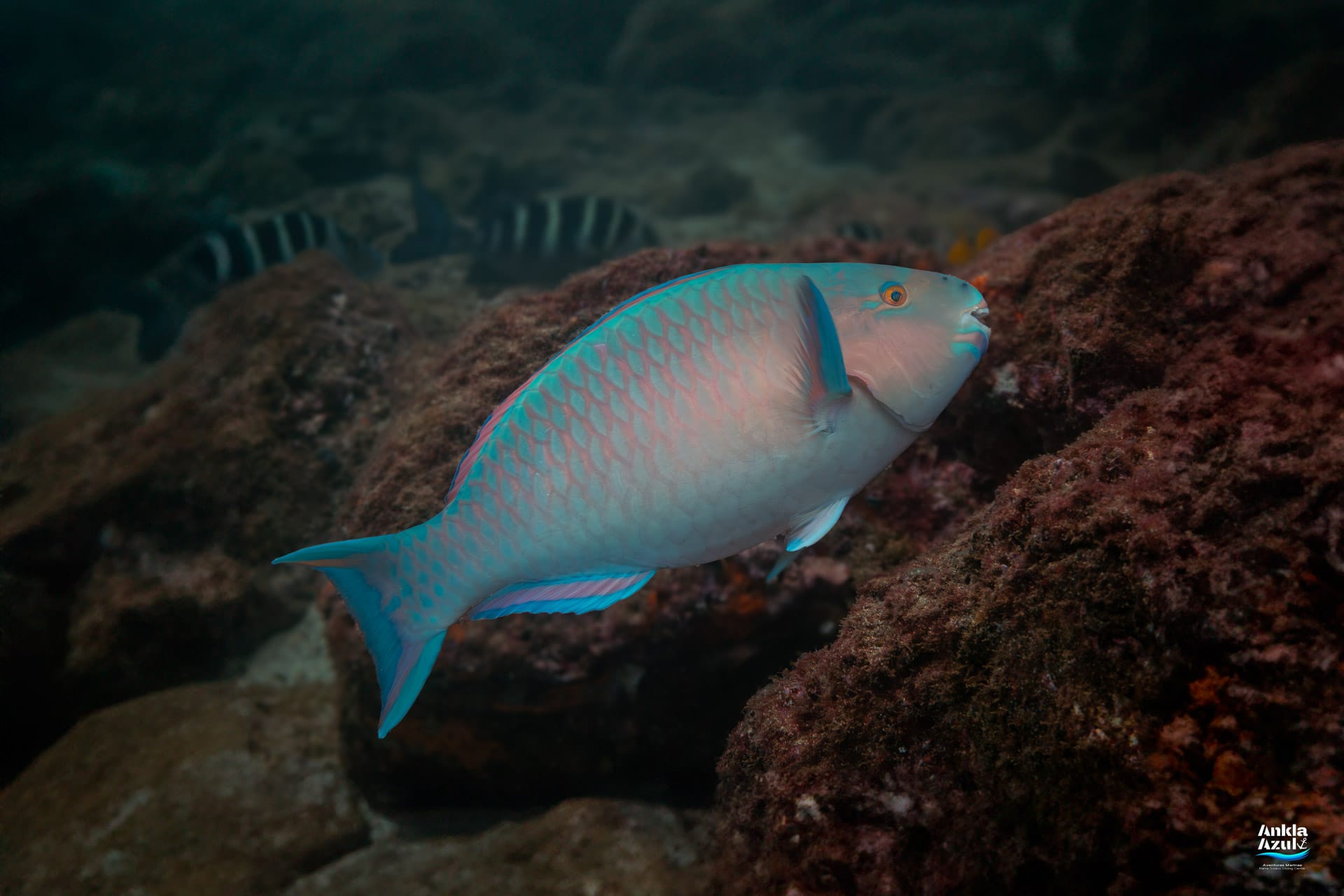
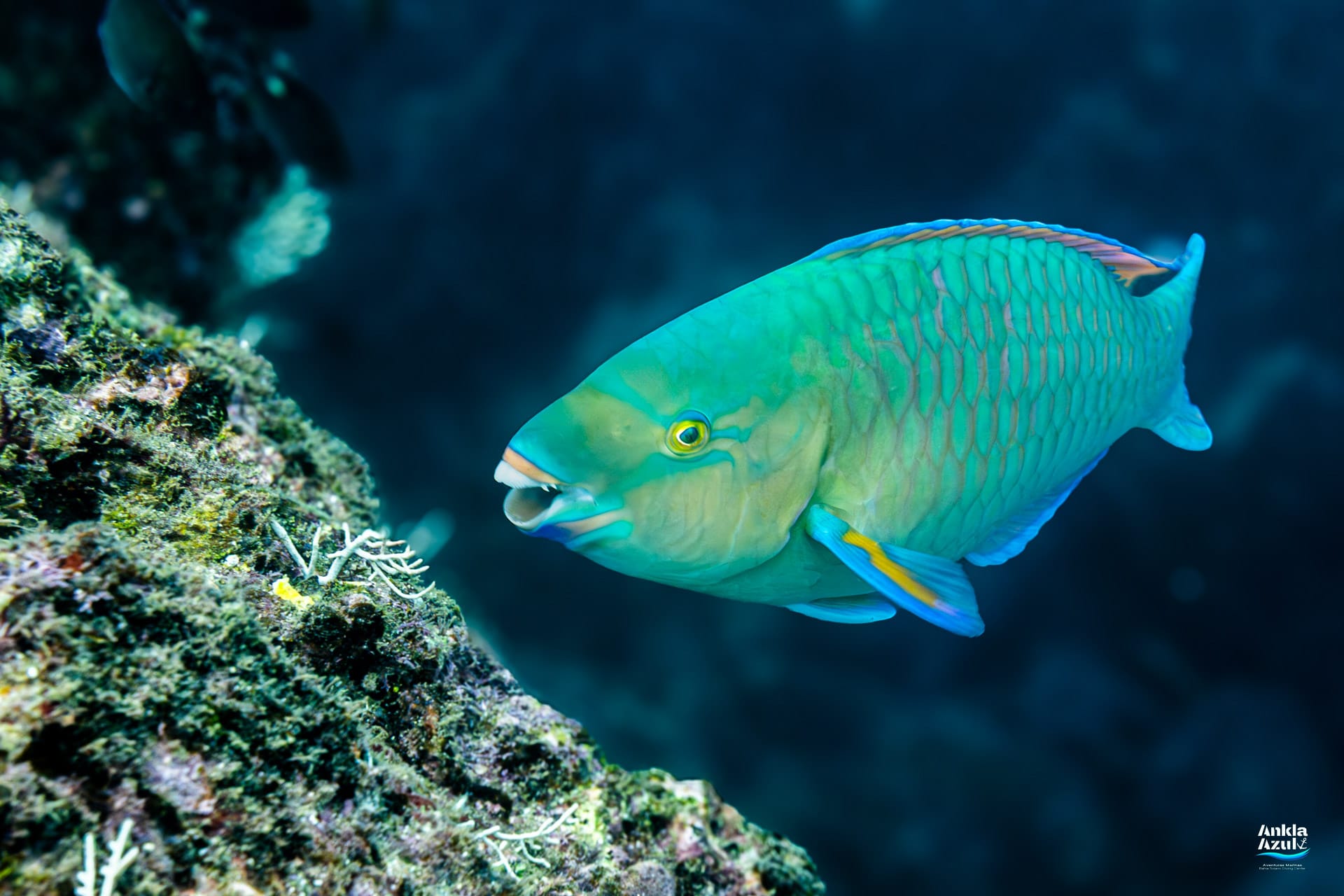
Blue-barred Parrotfish
Scarus ghobban
Adult
Family: Parrotfishes (Scaridae)
Size: Up to 75 cm (30 in) | Common: 40 cm
Depth: 1 – 30m (3 – 100ft)
Distribution: Widespread Indo-Pacific and Eastern Pacific (Gulf of California to Peru, including Galapagos and Malpelo).
Identification: A large, heavy-bodied reef grazer known for its drastic color changes.
- Terminal Phase Male (Pictured): Spectacular coloration. The body features blue-to-green scale edges with pinkish-salmon centers. Look for the distinct bright blue bands around the mouth and eyes, and blue margins on the tail and fins.
- Initial Phase (Female/Juvenile): Very different! They are generally yellowish-tan with five faint, irregular, vertical blue bars along their sides (which gives the species its "Blue-barred" name).
Behavior: The sand-making machine of the reef.
- Diet & Ecology: They use their fused, beak-like teeth to violently scrape algae off rocks and dead coral. They grind down the ingested rock in their throat and excrete it as fine white sand. A single large parrotfish can produce hundreds of pounds of sand per year!
- Sleeping Habit: At night, they wedge themselves into a crevice and secrete a transparent mucous cocoon around their entire body. This masks their scent from nocturnal predators like moray eels.
You just learned about this fish...
NOW COME SEE IT!
Behind the Lens
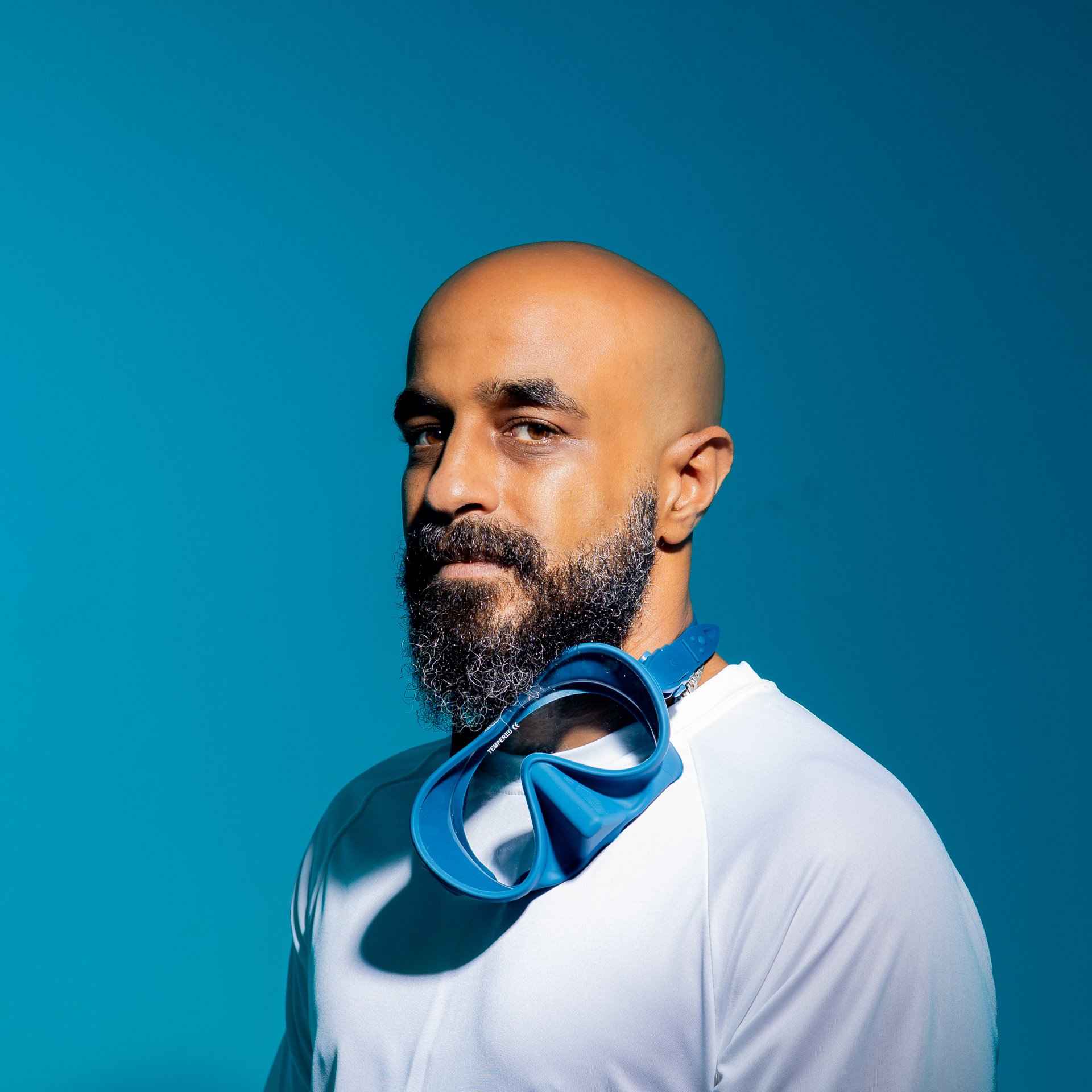
Jalvan
Underwater Photographer & Instructor
Documenting unique marine biodiversity from the Red Sea across the Pacific Ocean. Dedicated to creating a visual catalog of Bahia Solano's marine life for conservation and research.
Video: Osmo Action 5 Pro | GoPro
Follow my work:
advertisement
REFERENCES & DATA SOURCES
Scientific ID: Verified via FishBase (Froese & Pauly, 2024).
Field Guide: Reef Fish Identification: Baja to Panama (Humann & DeLoach).
Conservation Status: IUCN Red List (Least Concern).
Regional Data: Ankla Azul Marine Observation Log (Bahia Solano).
More Than Kicking Your Fins
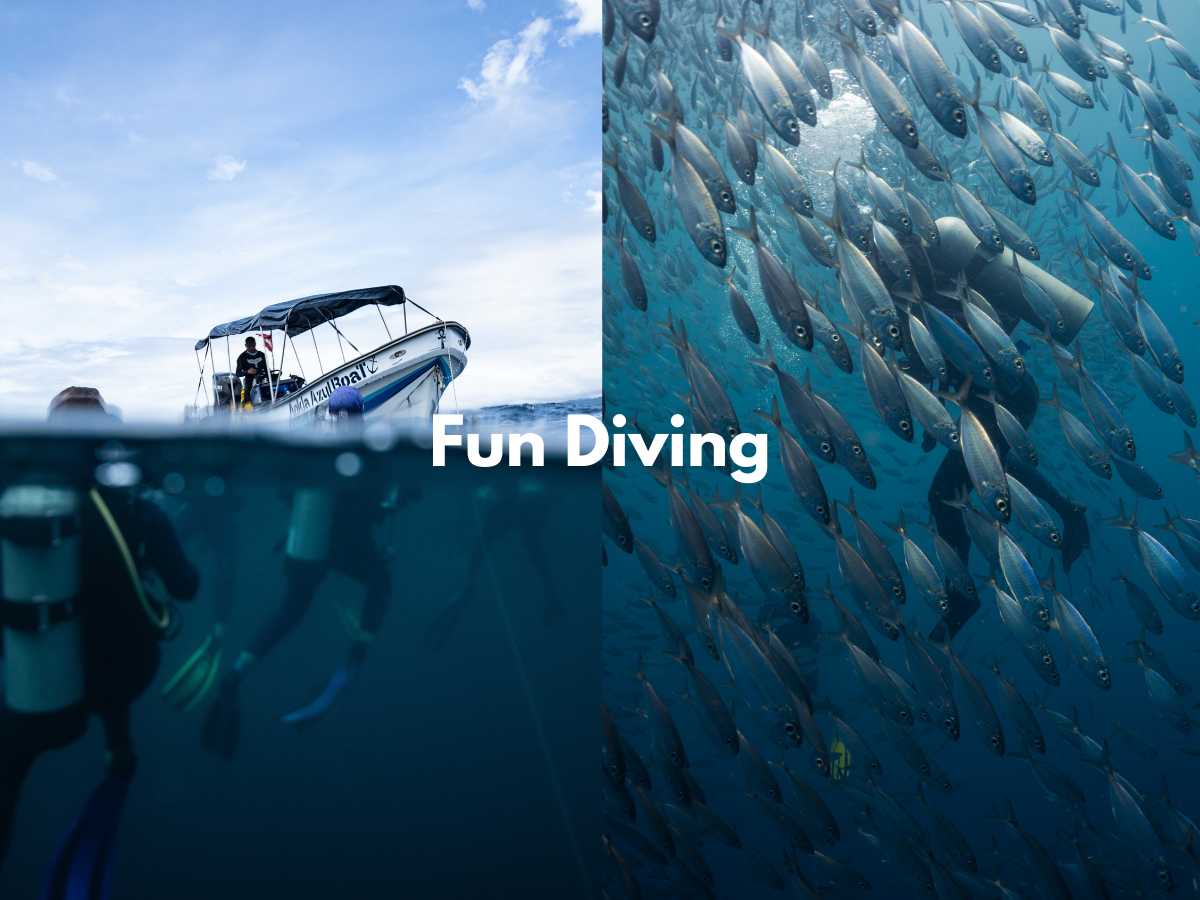
At Ankla Azul, diving is more than kicking your fins. It's patient teaching, sharp safety, and real care for the place we call home. As an SSI Instructor Training Center and an SSI Blue Oceans Center (2025 award), we blend skill-building with ocean awareness—Fish ID, coral nursery work, community education, and rescue support—so every dive grows confidence and respect for Bahía Solano's wild Pacific.