Pacific Porgy
Calamus brachysomus
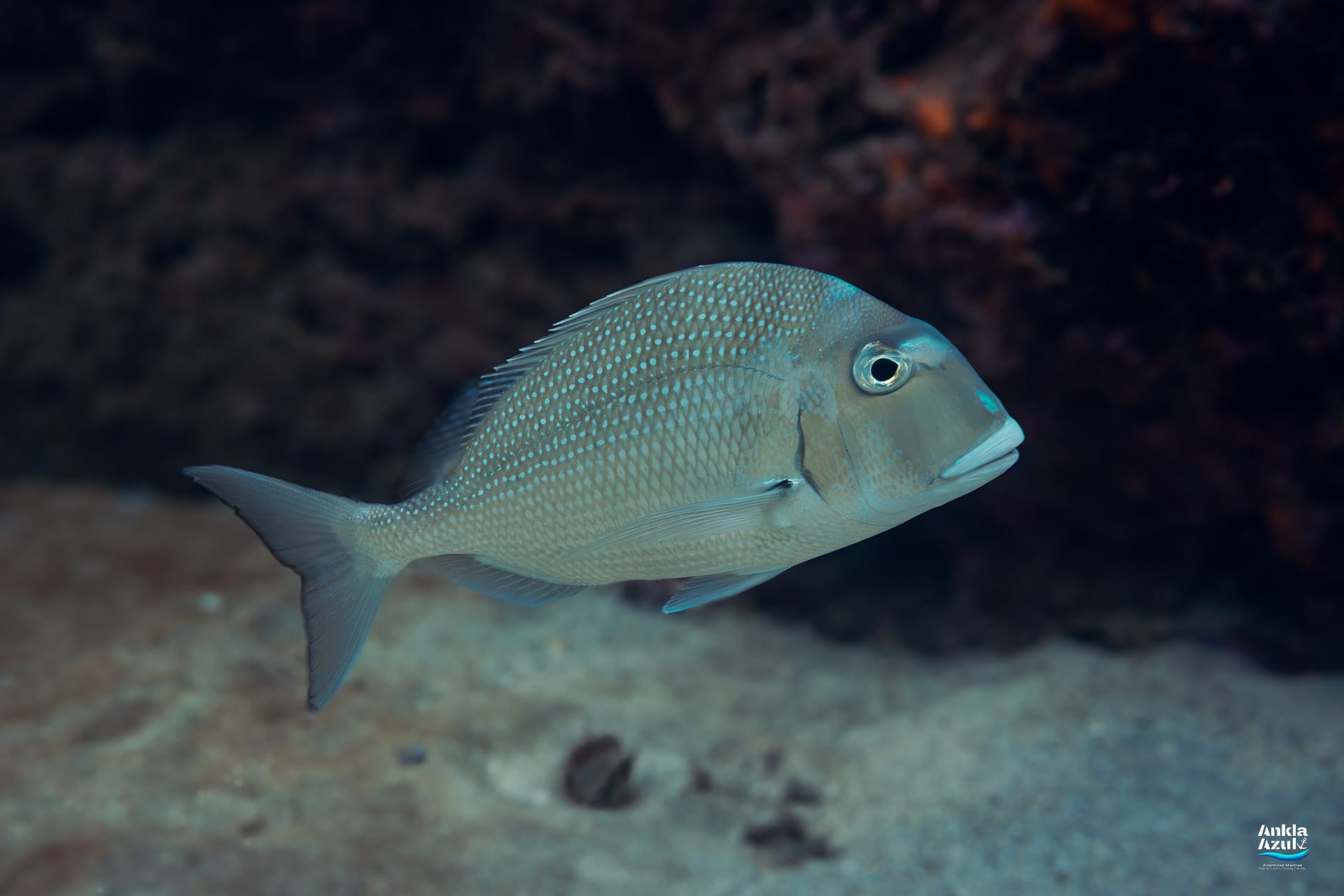
Adult
Family: Porgies (Sparidae)
Size: Up to 61 cm (24 in) | Common: 35 cm
Depth: 3 – 80m (10 – 260ft)
Distribution: Eastern Pacific (Southern California to Peru, including the Galapagos
Identification:
A large, disc-shaped fish with a very distinct profile.
- Body Shape: They have a very deep, laterally compressed body with a noticeably steep, almost vertical, convex forehead and a slightly pointed snout.
- Coloration: The body is overall silvery-grey. If you look closely at the face, cheeks, and upper body scales, you will often see subtle, iridescent blue spots or short lines.
- The Mouth: The mouth is positioned very low on the face and features thick, fleshy lips hiding powerful jaws.
Behavior:
A heavy-duty crusher of the sand flats.
- Habitat: While sometimes seen passing over the rocks, they are most commonly found hovering just above sandy bottoms and rubble adjacent to the main reef.
- Diet: They are specialized bottom feeders. They use their strong jaws and molar-like teeth to crush hard-shelled benthic invertebrates, primarily targeting bivalves, crabs, and small urchins hiding in the sand.
You just learned about this fish...
NOW COME SEE IT!
Behind the Lens
Jalvan
Underwater Photographer & Instructor
Documenting unique marine biodiversity from the Red Sea across the Pacific Ocean. Dedicated to creating a visual catalog of Bahia Solano's marine life for conservation and research.
Video: Osmo Action 5 Pro | GoPro
Follow my work:

advertisement
REFERENCES & DATA SOURCES
Scientific ID: Verified via FishBase (Froese & Pauly, 2024).
Field Guide: Reef Fish Identification: Baja to Panama (Humann & DeLoach).
Conservation Status: IUCN Red List (Least Concern).
Regional Data: Ankla Azul Marine Observation Log (Bahia Solano).
More Than Kicking Your Fins
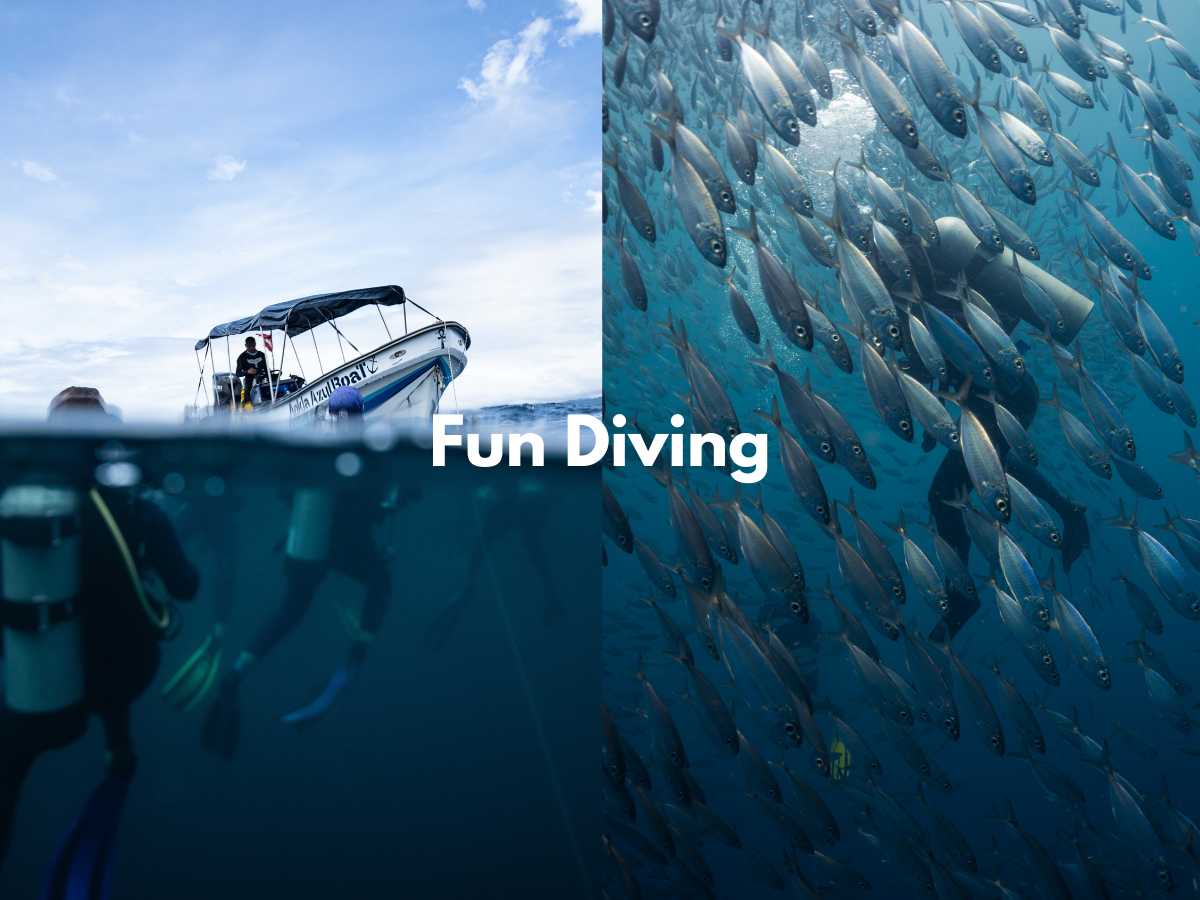
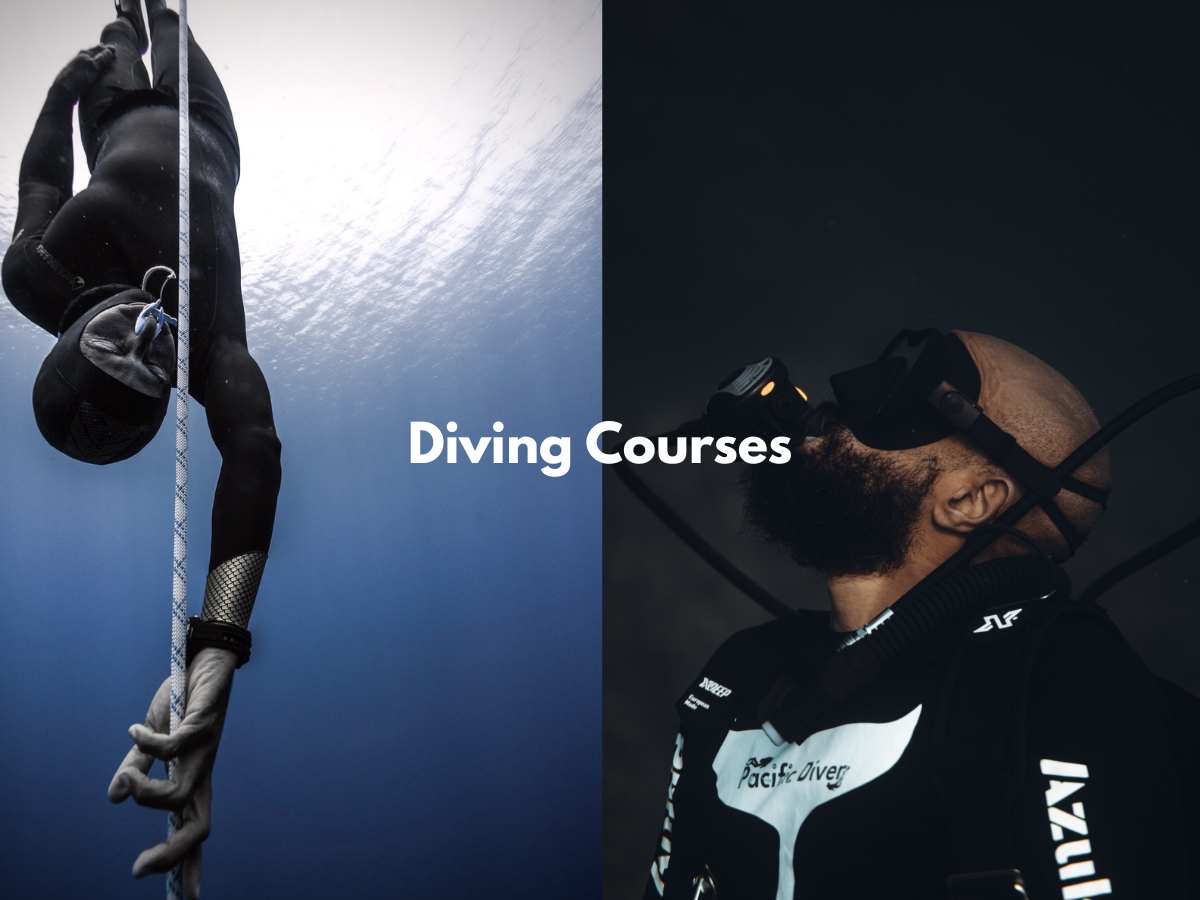
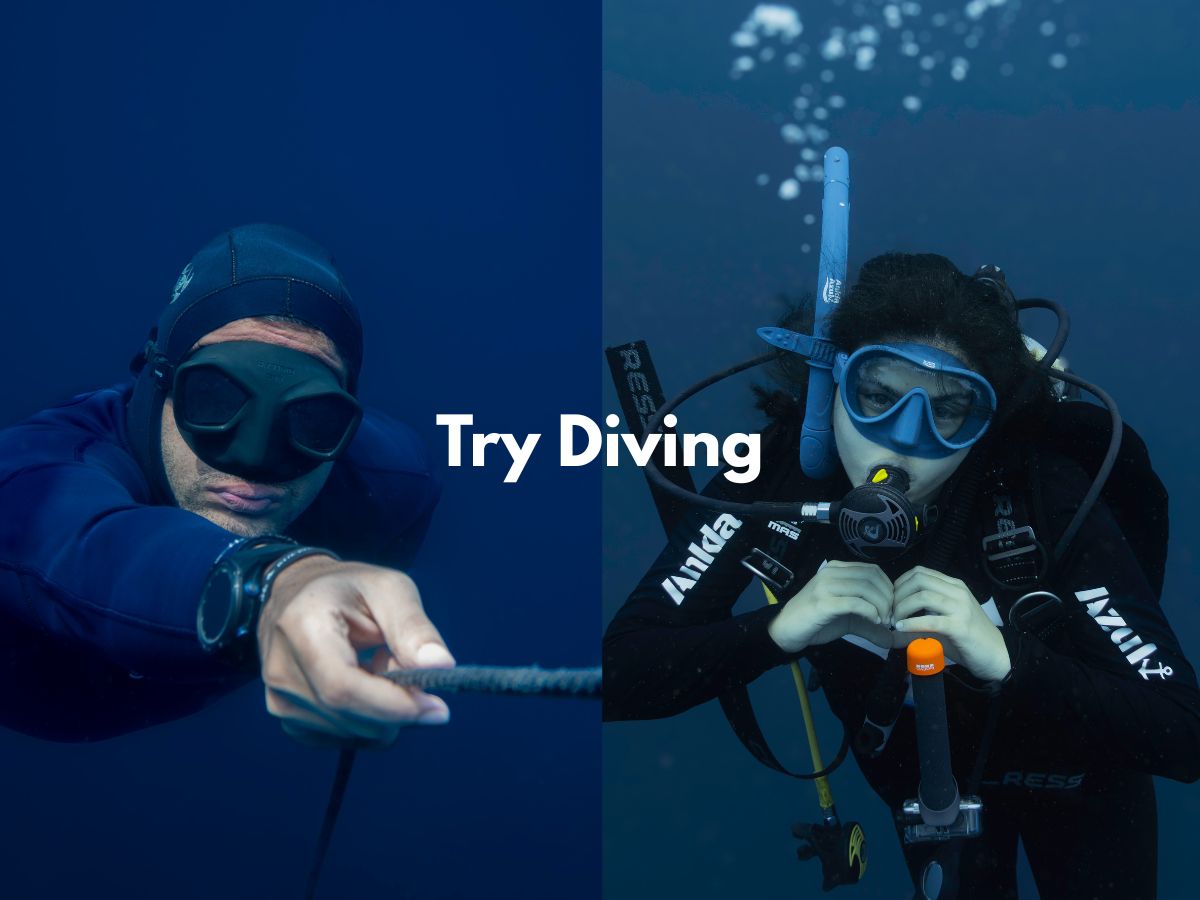
At Ankla Azul, diving is more than kicking your fins. It's patient teaching, sharp safety, and real care for the place we call home. As an SSI Instructor Training Center and an SSI Blue Oceans Center (2025 award), we blend skill-building with ocean awareness—Fish ID, coral nursery work, community education, and rescue support—so every dive grows confidence and respect for Bahía Solano's wild Pacific.