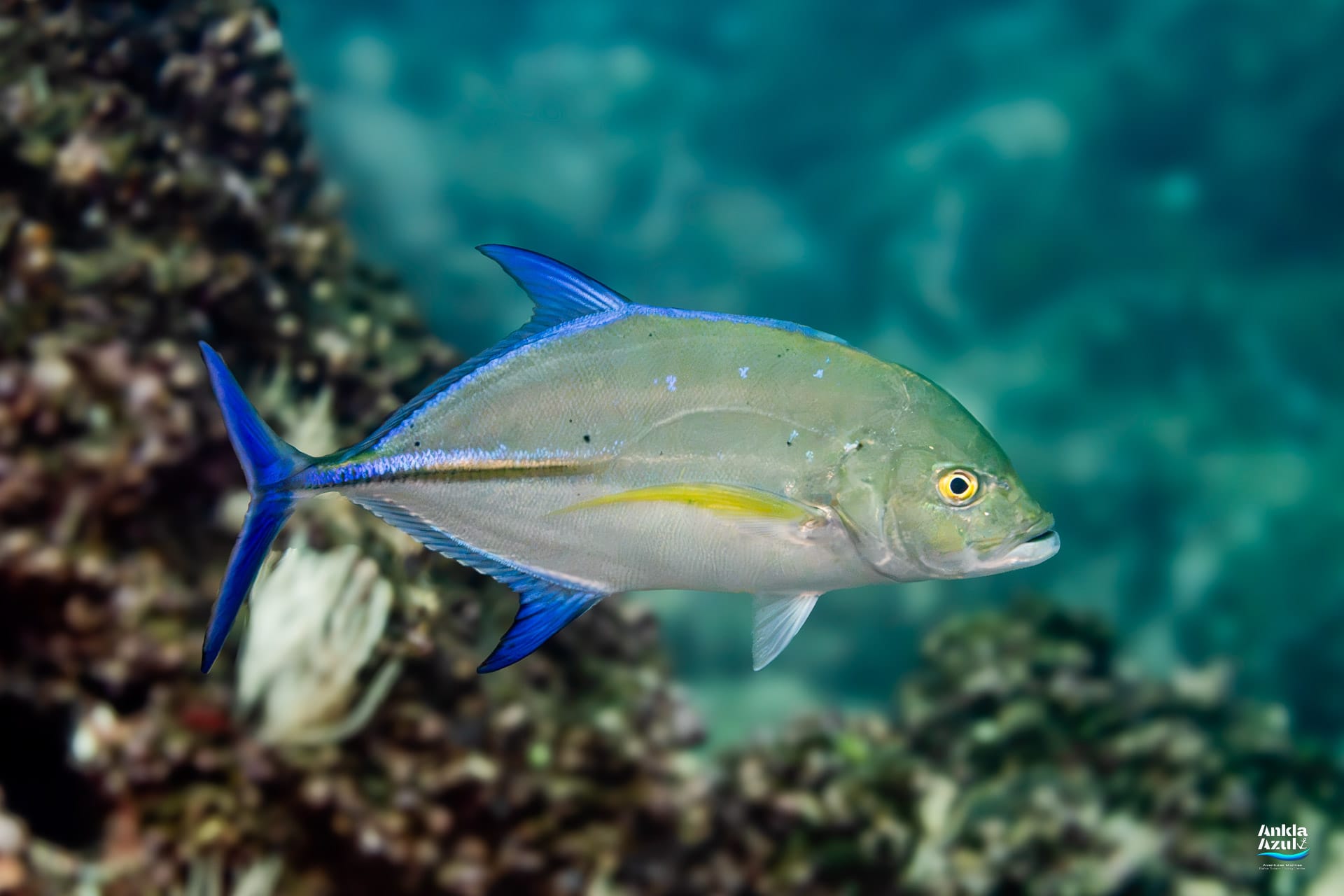
Bluefin Trevally
Caranx melampygus
Family: Jacks & Trevally (Carangidae)
Size: Up to 117 cm (46 in) | Common: 60 cm (24 in)
Depth: 1 – 190m (3 – 620ft)
Distribution: Widespread Indo-Pacific and Eastern Tropical Pacific (Mexico to Panama, including Malpelo and the Chocó coast).
Identification: A fast-moving, brightly colored predator built for speed.
- Electric Blue Fins: The dorsal, anal, and tail fins radiate a stunning neon blue color that stands out even in deeper, darker water.
- Speckled Body: The upper half of the silvery-blue body is heavily speckled with small dark and blue spots, often featuring a distinct golden or yellowish wash along the lateral line.
- Steep Profile: They possess a steeply sloping snout and a robust, deep body typical of the Carangidae family.
Behavior: Highly aggressive daytime hunters of the rocky reef.
- Reef Patrollers: Often seen solitary or in small hunting packs, darting rapidly through the water column to ambush smaller schooling reef fish.
- Hunting Partners: They are famously known to team up with other predators, such as whitetip reef sharks or octopuses, following them closely to snatch up any small fish that flush out of hiding holes.
You just learned about this fish...
NOW COME SEE IT!
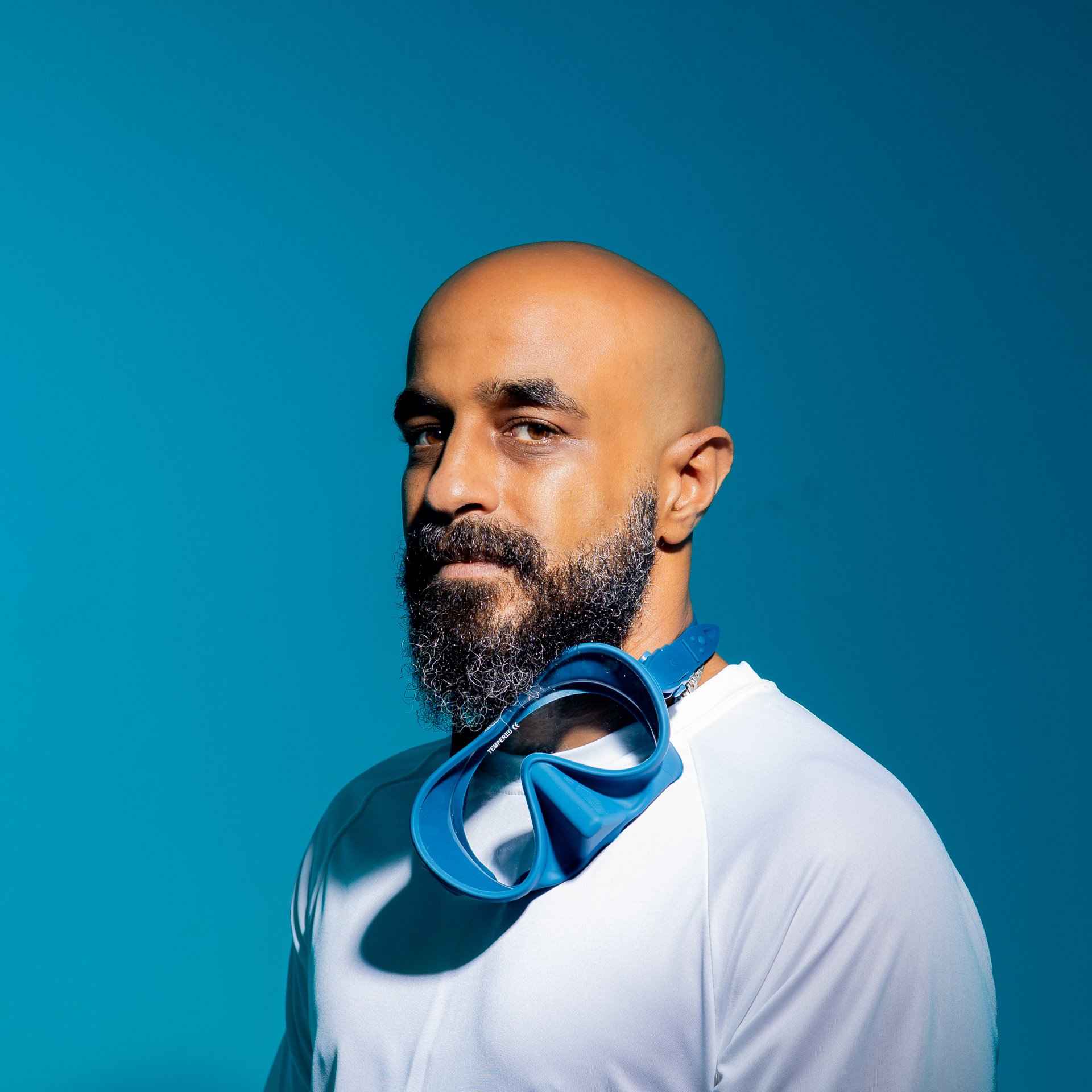
Behind the Lens
Jalvan
Underwater Photographer & Instructor
Documenting unique marine biodiversity from the Red Sea across the Pacific Ocean. Dedicated to creating a visual catalog of Bahia Solano's marine life for conservation and research.
Video: Osmo Action 5 Pro | GoPro
Follow my work:
advertisement
REFERENCES & DATA SOURCES
- Scientific ID: Verified via FishBase (Froese & Pauly) & Regional Eastern Pacific data.
- Field Guide: Reef Fish Identification: Baja to Panama (Humann & DeLoach).
- Conservation Status: IUCN Red List (Least Concern).
- Regional Data: Ankla Azul Marine Observation Log (Bahia Solano).
More Than Kicking Your Fins
At Ankla Azul, diving is more than kicking your fins. It's patient teaching, sharp safety, and real care for the place we call home. As an SSI Instructor Training Center and an SSI Blue Oceans Center (2025 award), we blend skill-building with ocean awareness—Fish ID, coral nursery work, community education, and rescue support—so every dive grows confidence and respect for Bahía Solano's wild Pacific.