
Snowflake Moray
Echidna nebulosa
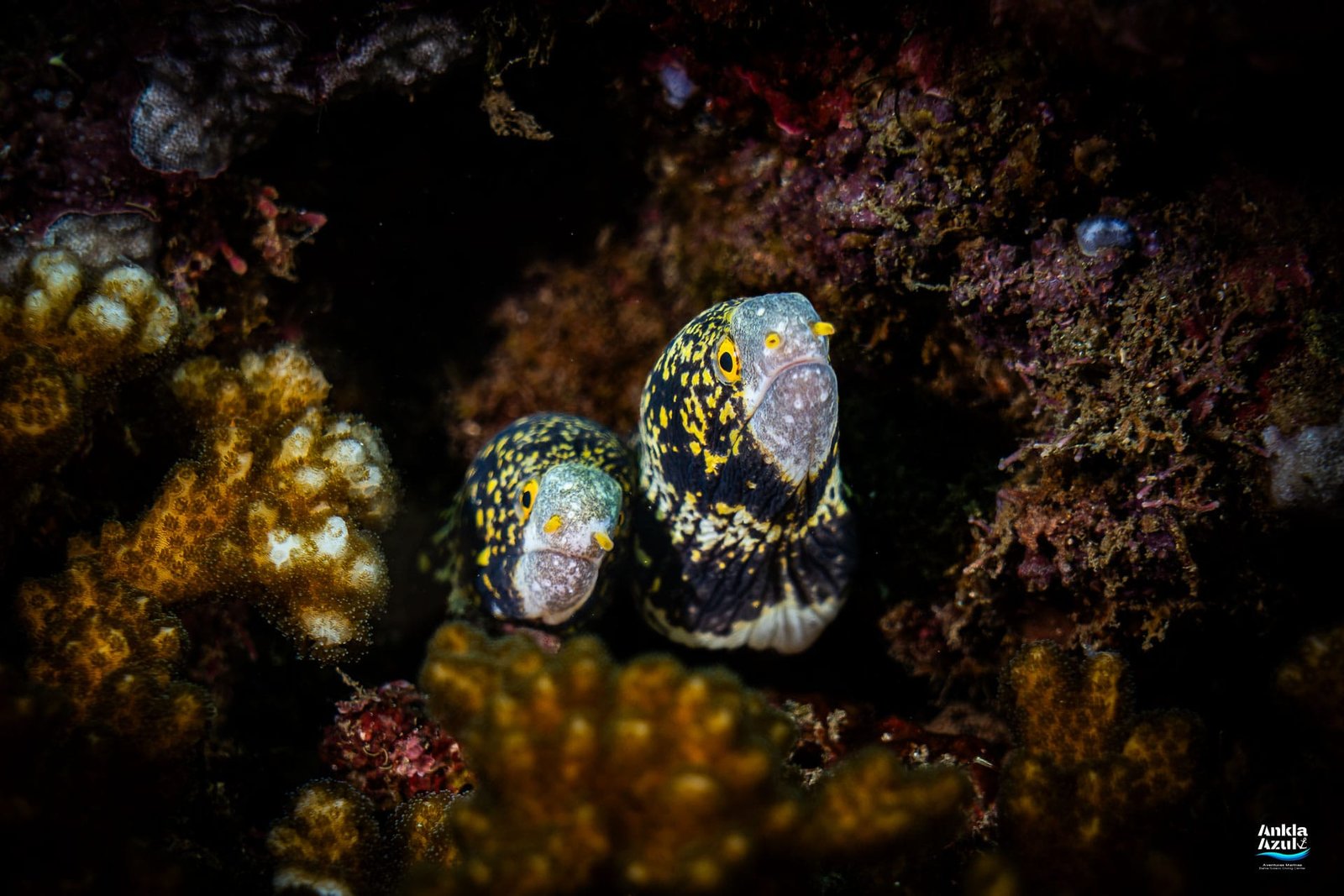
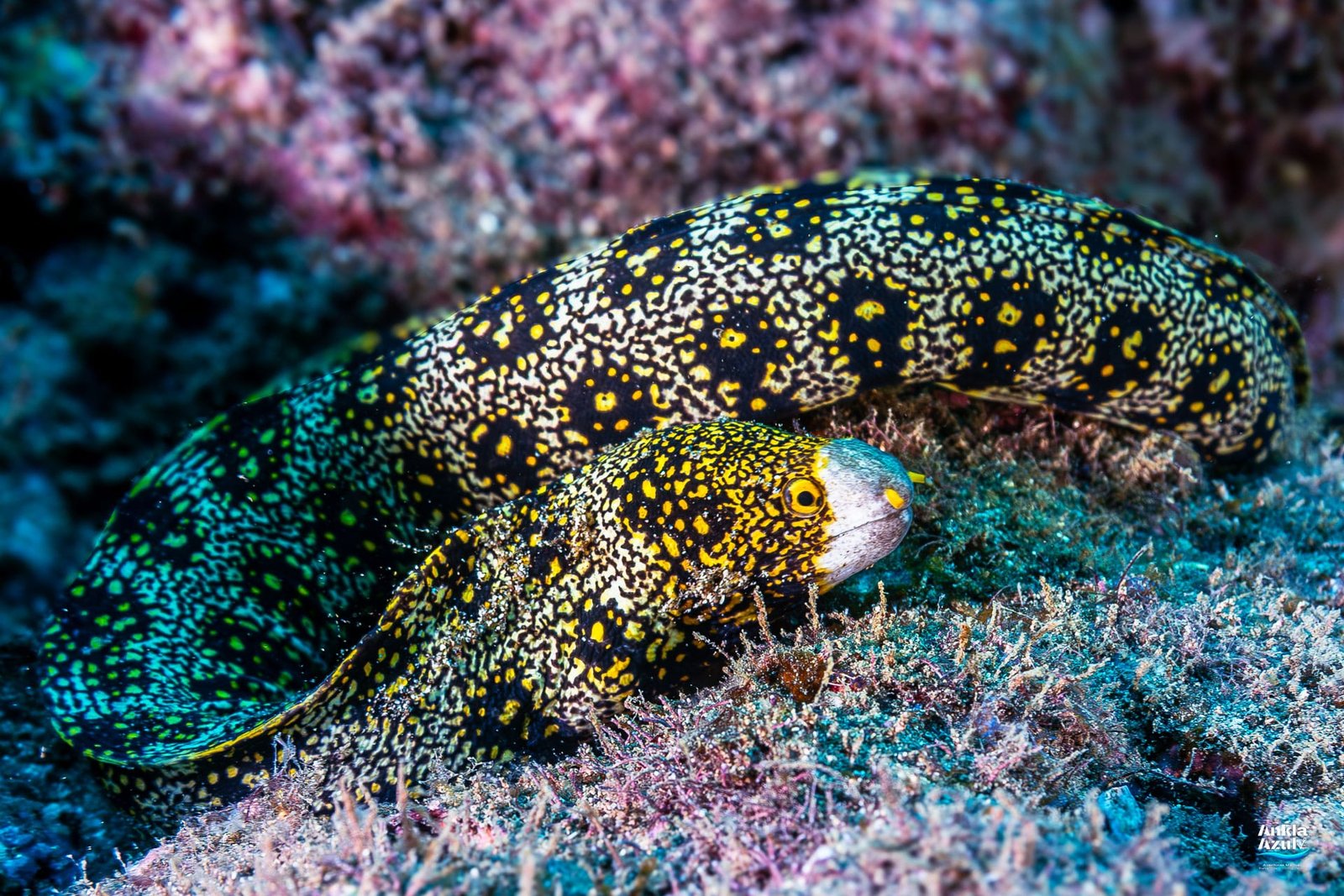
Adult
Family: Moray Eels (Muraenidae)
Size: Up to 100 cm (39 in)
Depth: 1 – 30m (3 – 100ft)
Distribution: Widespread Indo-Pacific and Eastern Tropical Pacific (including the Chocó coast and Colombia).
Identification: A beautifully patterned moray built for hunting crustaceans.
- The "Snowflakes": The body has a pale white or yellowish base, heavily decorated with large, star-like black and brown blotches that resemble snowflakes.
- Blunt Snout: Unlike fish-eating morays with pointed snouts and needle-like teeth, the Snowflake Moray has a blunt, rounded snout with pebble-like teeth designed for crushing hard shells.
- Yellow Accents: Look for striking yellow markings around their eyes and prominent nostrils.
Behavior: Nocturnal crustacean hunters of the shallow reefs.
- Reef Dwellers: They are extremely common in shallow rocky reefs and rubble areas along the Pacific coast. During the day, they hide deep inside crevices with only their heads protruding.
- Mouth Breathing: Divers frequently spot them rhythmically opening and closing their mouths. This is not a threat, but simply how they pump water over their gills to breathe.
You just learned about this fish...
NOW COME SEE IT!
Behind the Lens
Jalvan
Underwater Photographer & Instructor
Documenting unique marine biodiversity from the Red Sea across the Pacific Ocean. Dedicated to creating a visual catalog of Bahia Solano's marine life for conservation and research.
Video: Osmo Action 5 Pro | GoPro
Follow my work:

advertisement
REFERENCES & DATA SOURCES
- Scientific ID: Verified via FishBase (Froese & Pauly) & Regional Eastern Pacific data.
- Field Guide: Reef Fish Identification: Baja to Panama (Humann & DeLoach).
- Conservation Status: IUCN Red List (Least Concern).
- Regional Data: Ankla Azul Marine Observation Log (Bahia Solano).
More Than Kicking Your Fins
At Ankla Azul, diving is more than kicking your fins. It's patient teaching, sharp safety, and real care for the place we call home. As an SSI Instructor Training Center and an SSI Blue Oceans Center (2025 award), we blend skill-building with ocean awareness—Fish ID, coral nursery work, community education, and rescue support—so every dive grows confidence and respect for Bahía Solano's wild Pacific.