
Whitetip Reef Shark
Triaenodon obesus
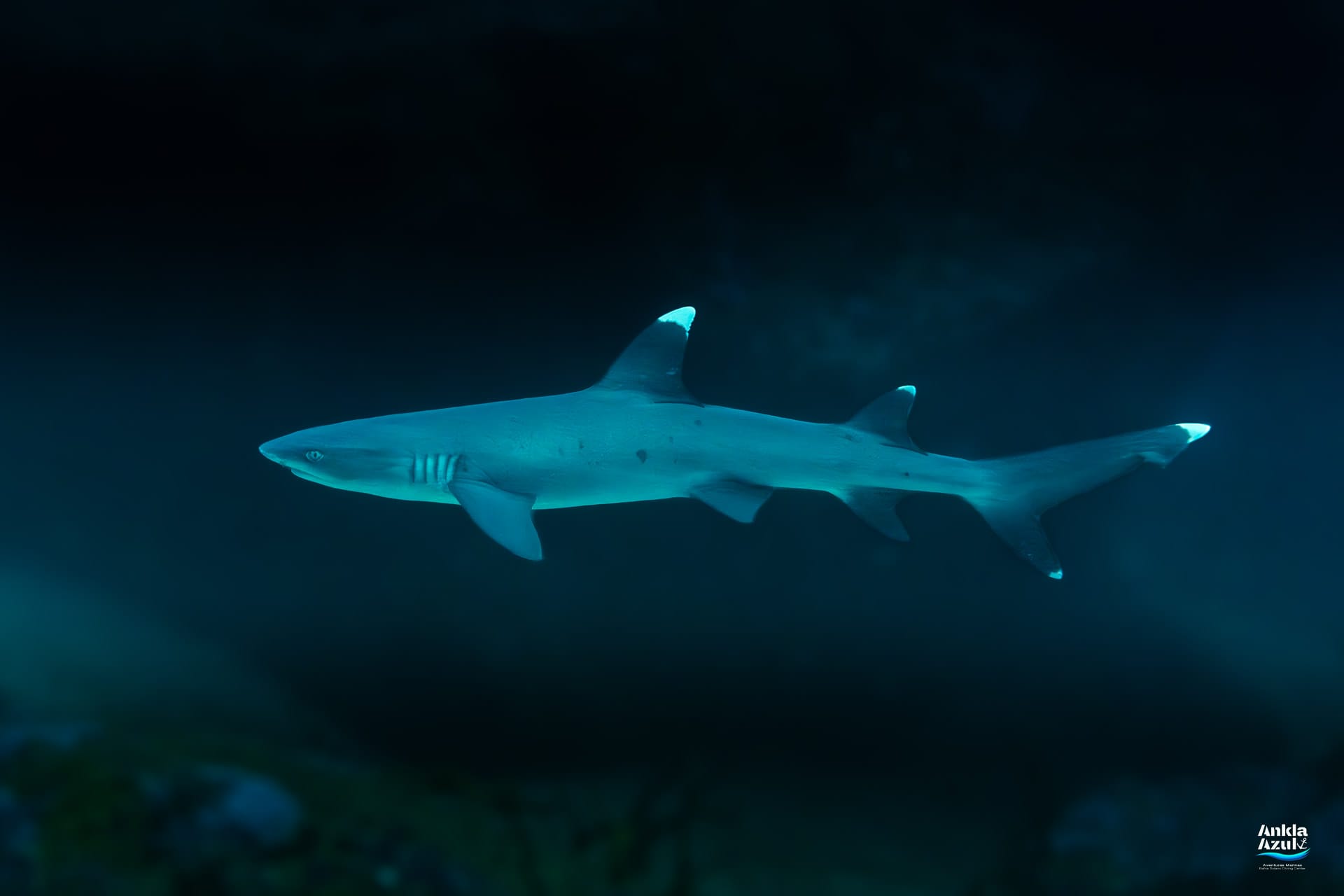
Adult
Family: Requiem Sharks (Carcharhinidae)
Size: Up to 210 cm (7 ft) | Common: 160 cm (5.2 ft)
Depth: 1 – 40m (3 – 130ft)
Distribution: Widespread Indo-Pacific and Eastern Tropical Pacific (including Gorgona, Malpelo, Cocos, and the Chocó coast).
Identification: A slender, unmistakable shark often found resting on the reef.
- White Tips: As the name clearly implies, the very tips of the first dorsal fin (on its back) and the upper lobe of the caudal fin (tail) appear to be dipped in bright white paint.
- Slender Profile: They feature a distinctively sleek, greyish-brown body paired with a blunt, somewhat flattened snout designed for hunting in crevices.
Behavior: A nocturnal hunter that takes daytime naps.
- Cave Sleepers: Unlike many pelagic sharks that must swim constantly to breathe, Whitetip Reef Sharks can actively pump water over their gills. During the day, they are often found resting motionless on sandy bottoms or piled together inside dark volcanic rocky crevices.
- Night Foraging: At night, they become highly active, using their flexible, slender bodies to wriggle deep into tight reef structures to hunt sleeping fish, octopuses, and crustaceans.
You just learned about this fish...
NOW COME SEE IT!
Behind the Lens
Jalvan
Underwater Photographer & Instructor
Documenting unique marine biodiversity from the Red Sea across the Pacific Ocean. Dedicated to creating a visual catalog of Bahia Solano's marine life for conservation and research.
Video: Osmo Action 5 Pro | GoPro
Follow my work:

advertisement
REFERENCES & DATA SOURCES
- Scientific ID: Verified via FishBase (Froese & Pauly) & Regional Eastern Pacific data.
- Field Guide: Reef Fish Identification: Baja to Panama (Humann & DeLoach).
- Conservation Status: IUCN Red List (Least Concern).
- Regional Data: Ankla Azul Marine Observation Log (Bahia Solano).
More Than Kicking Your Fins
At Ankla Azul, diving is more than kicking your fins. It's patient teaching, sharp safety, and real care for the place we call home. As an SSI Instructor Training Center and an SSI Blue Oceans Center (2025 award), we blend skill-building with ocean awareness—Fish ID, coral nursery work, community education, and rescue support—so every dive grows confidence and respect for Bahía Solano's wild Pacific.