
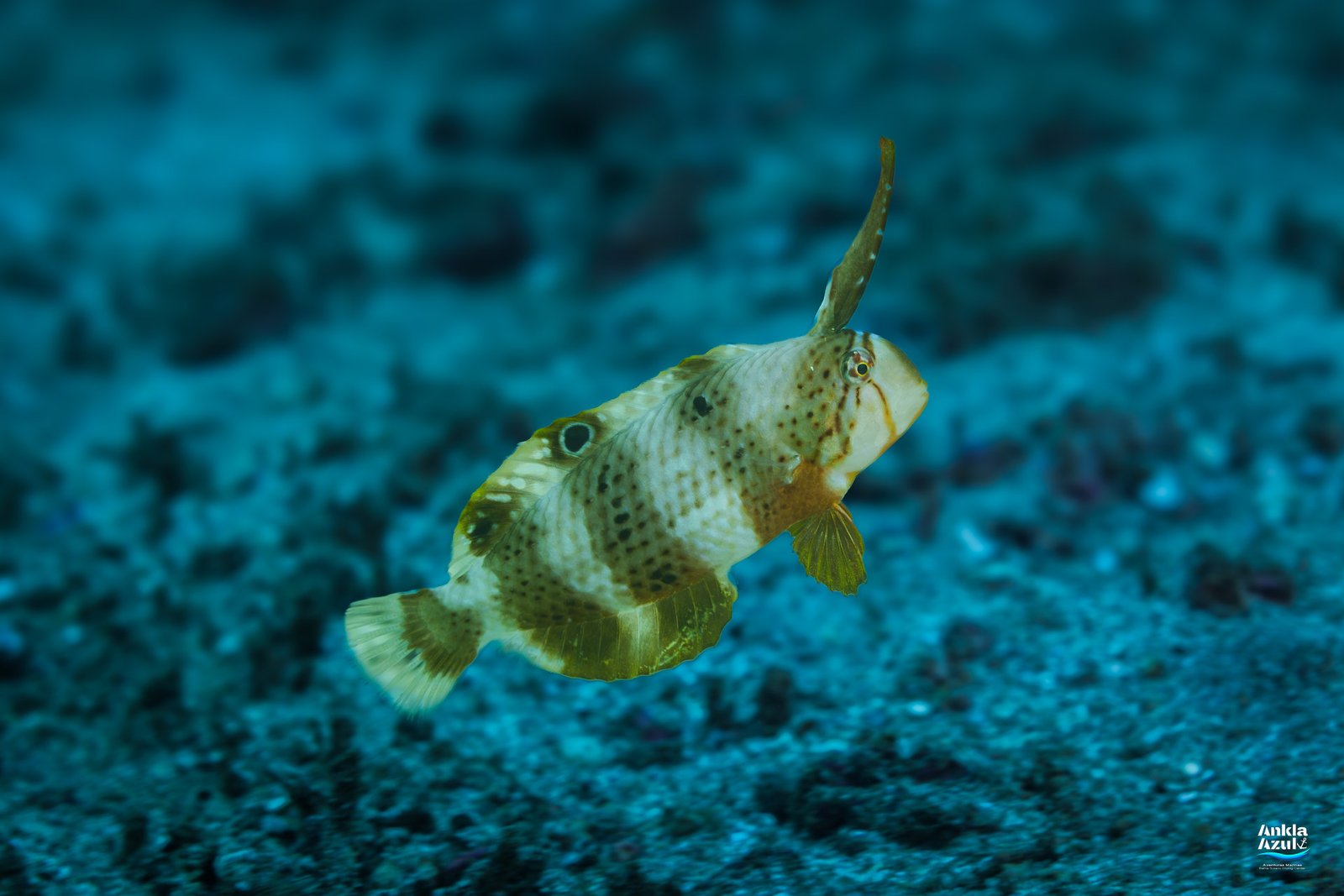
Mexican Hogfish (Female)
Bodianus diplotaenia
The Mexican Hogfish (Bodianus diplotaenia) is a large, shape-shifting Eastern Tropical Pacific wrasse whose initial-phase females display pale yellowish bodies with reddish-brown cross-hatching, two broken dark stripes, and bright yellow tails across rocky reefs (5–76 m) in Bahía Solano.
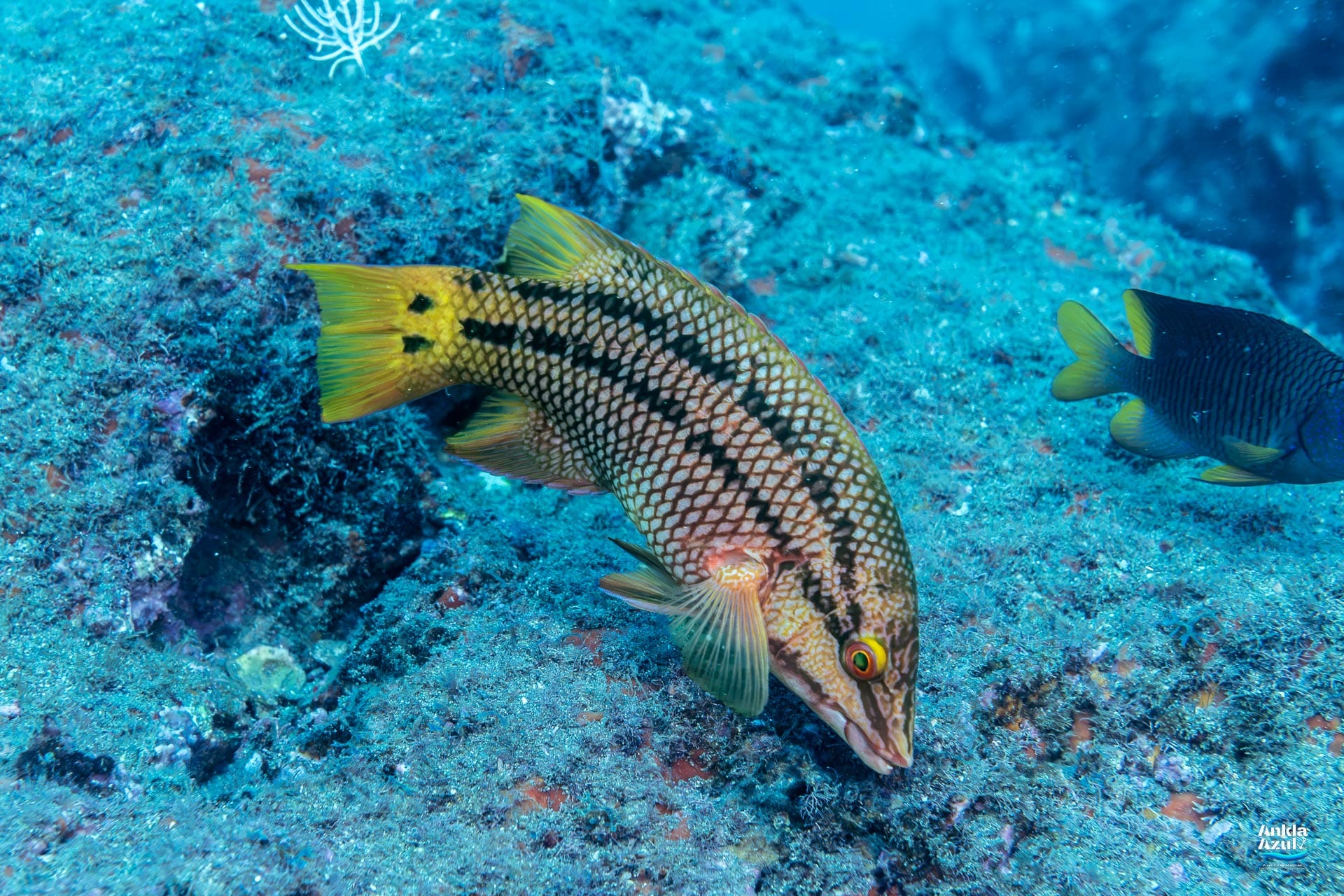
Initial Phase
Familia: Lábridos (Labridae)
Tamaño: Up to 76 cm (30 in) — commonly 40 – 50 cm (16 – 20 in)
Profundidad: 5 – 76m (15 – 250ft) — most common on rocky reefs (5 – 30m)
Dieta: Carnivore (crabs, sea urchins, brittle stars, mollusks, worms, and small fishes)
Distribución: Eastern Tropical Pacific (Gulf of California to Peru, including Colombia's Chocó coast, Malpelo, Cocos, and the Galápagos Islands).
Estado de conservación Least Concern (IUCN)
Identificación: A true shape-shifter of the Pacific reef, displaying wildly different colors at each stage of life.
- Female / Initial Phase (Pictured): Features a pale yellowish body covered in distinct reddish-brown cross-hatching, a bright yellow tail, and two prominent broken dark horizontal stripes along the sides.
- Male & Juvenile Phases: Terminal males grow massive with a pronounced forehead bump, long trailing fin filaments, and a dark bluish-grey to reddish-brown body with a pale yellow vertical bar. Juveniles are tiny, slender, and bright yellow with two solid black stripes.
Comportamiento: Active, dynamic daytime foragers along Bahía Solano's rocky reefs.
- Daytime Hunters: Solitary cruisers that patrol volcanic reefs by day, flipping small rocks to crunch crabs, sea urchins, and brittle stars before sheltering in crevices at night.
- Cleaning Duties: Tiny yellow juveniles frequently set up cleaning stations, bravely picking parasites off much larger reef predators.
Similar Species
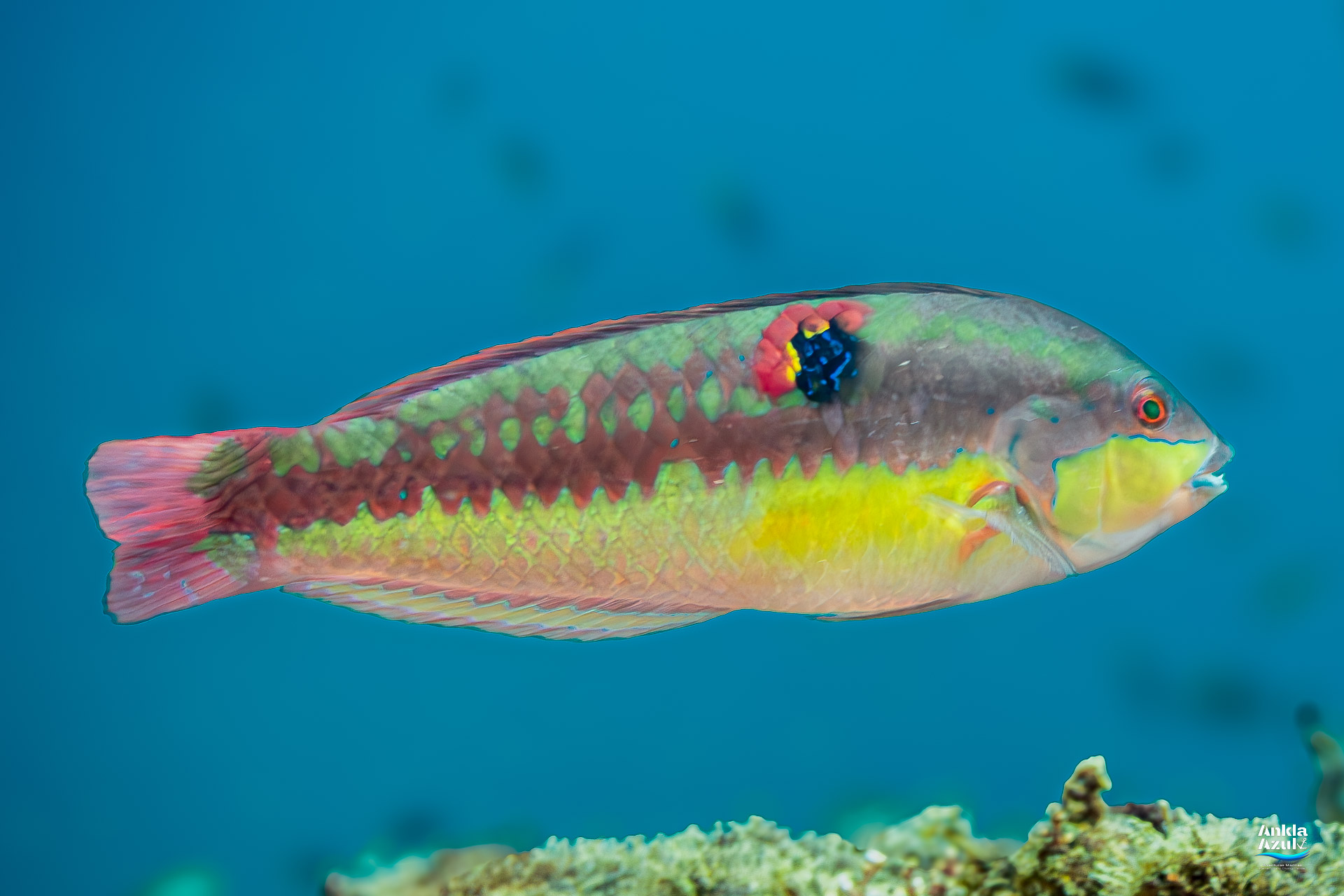
Lábrido Herido
Halichoeres chierchiae
Family: Labridae | Size: Up to 20 cm
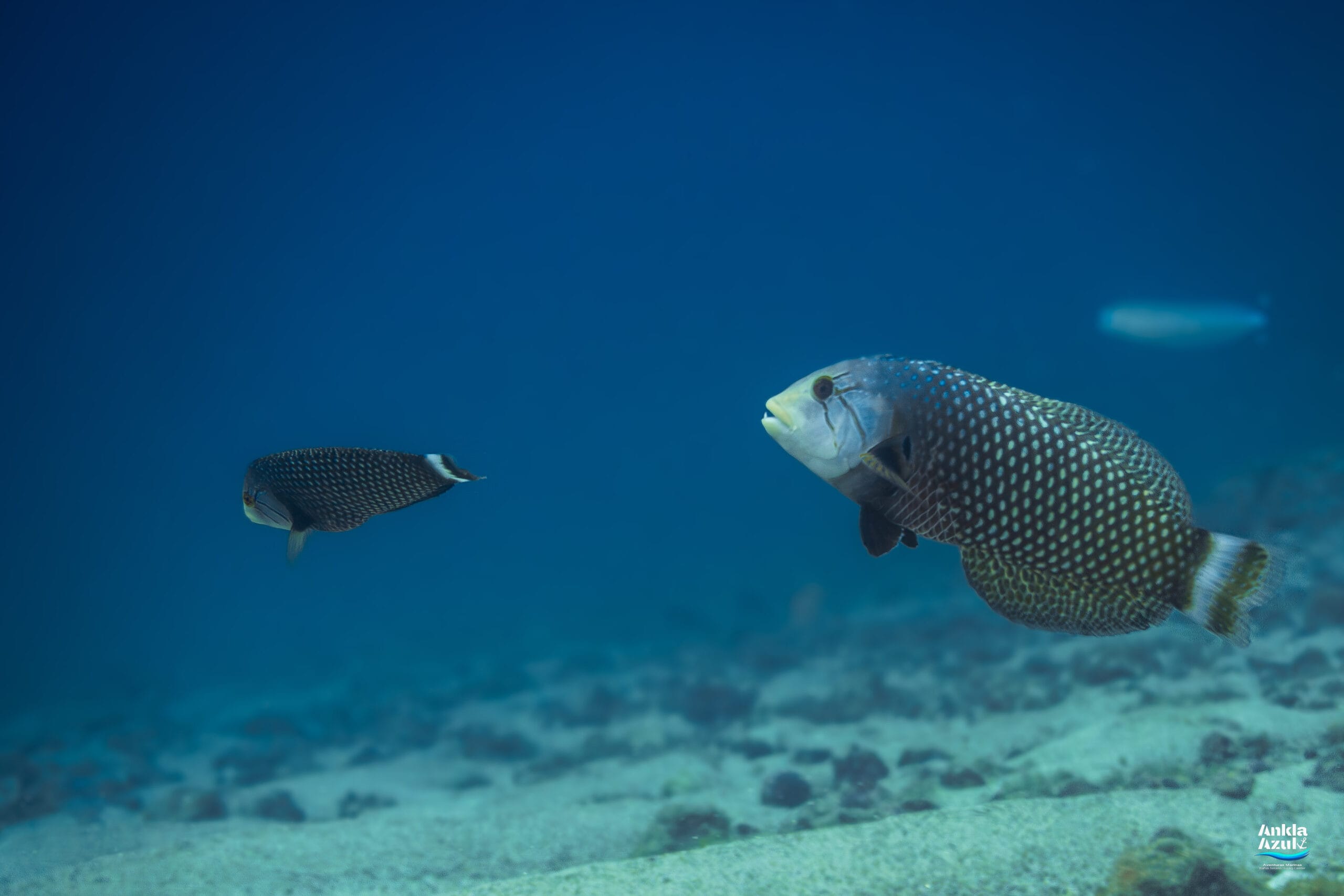
Rockmover Wrasse (Adult)
Novaculichthys taeniourus
Family: Labridae | Size: Up to 30 cm
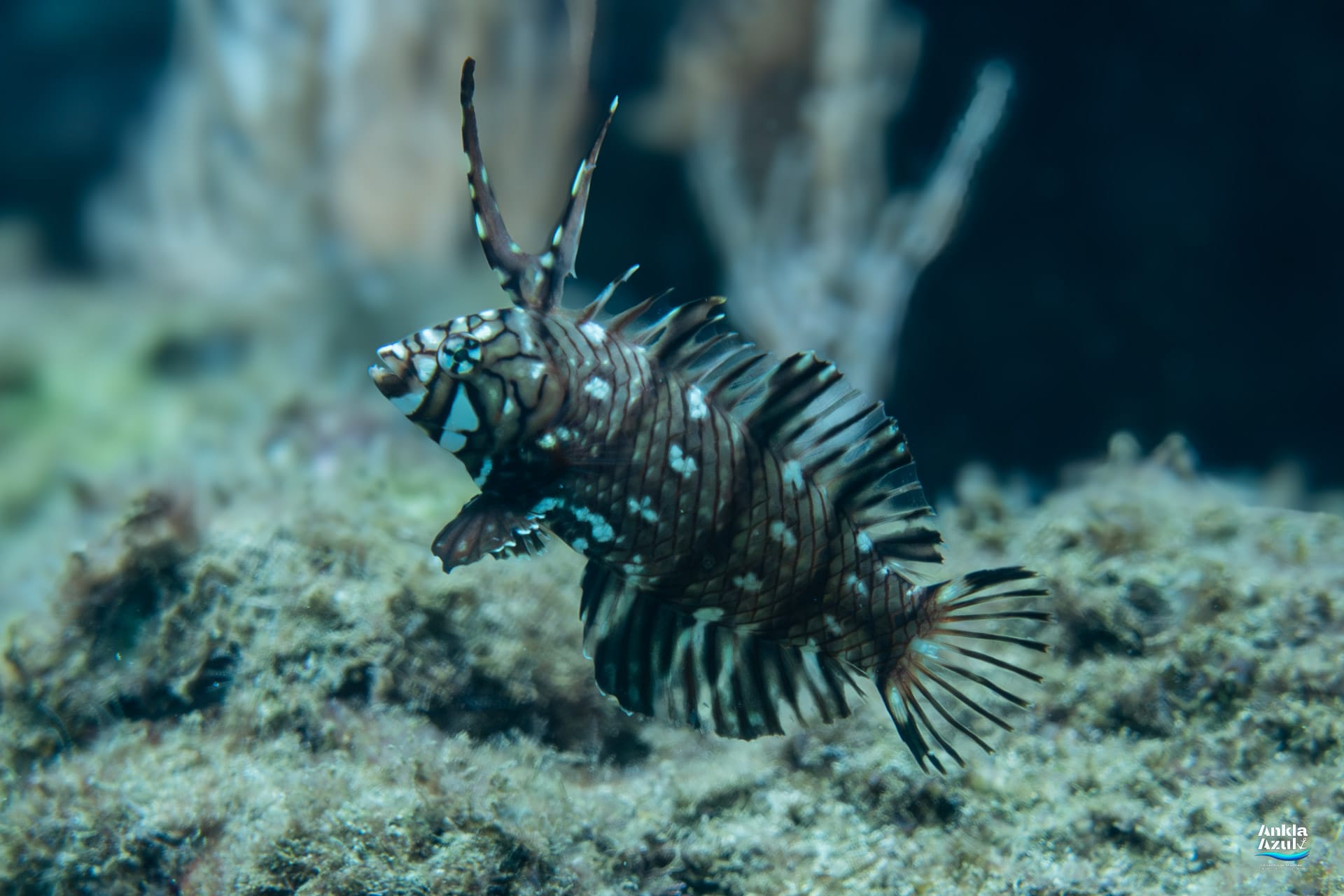
Dragon Wrasse (Juvenile)
Novaculichthys taeniourus
Family: Labridae | Size: Up to 8 cm
Peacock Razorfish (Juvenile)
Iniistius pavo
Family: Labridae | Size: Up to 35 cm
Acabas de aprender sobre este pez…
¡AHORA VEN A VERLO!
Tras el lente
Jalvan
Fotógrafo subacuático & instructor
Documentando la biodiversidad marina única desde el Mar Rojo hasta el Océano Pacífico.. Dedicated to creating a visual catalog of Bahia Solano's marine life for conservation and research.
Sigue mi trabajo:

advertisement
REFERENCIAS Y FUENTES DE DATOS
- Scientific ID: Verified via FishBase (Froese & Pauly) & Regional Eastern Pacific data.
- Guía de campo: Reef Fish Identification: Baja to Panama (Humann & DeLoach).
- Conservation Status: IUCN Red List (Least Concern).
- Datos regionales: Registro de Observaciones Marinas de Ankla Azul (Bahía Solano).
Mucho más que solo mover las aletas
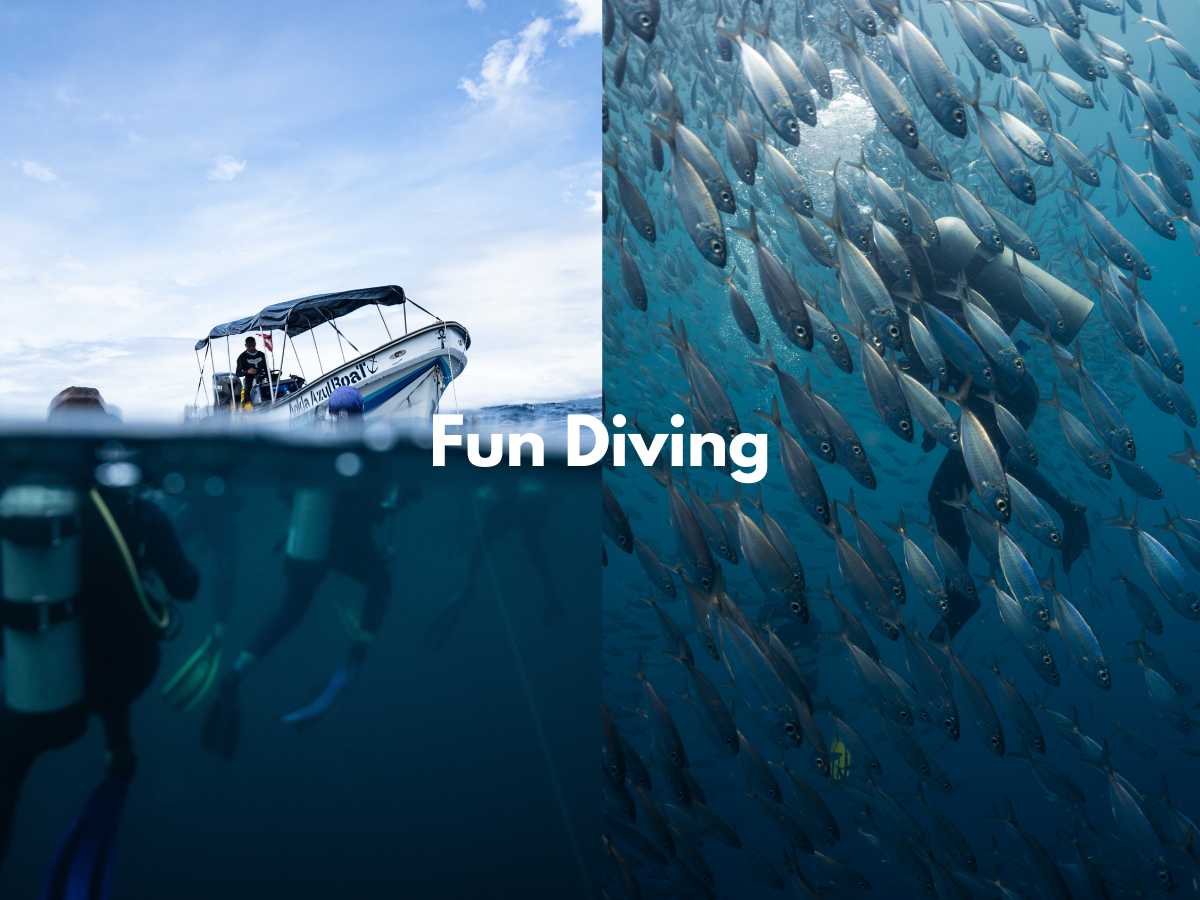
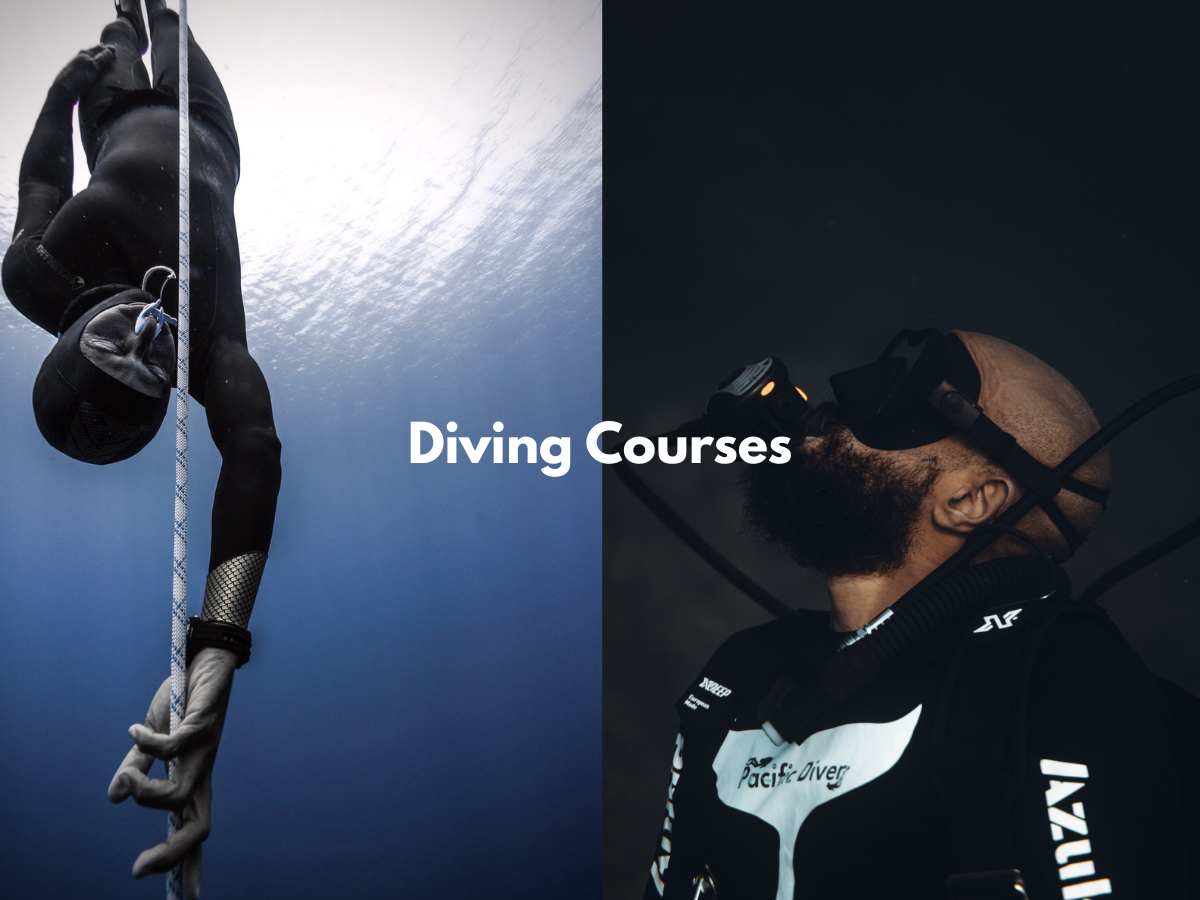
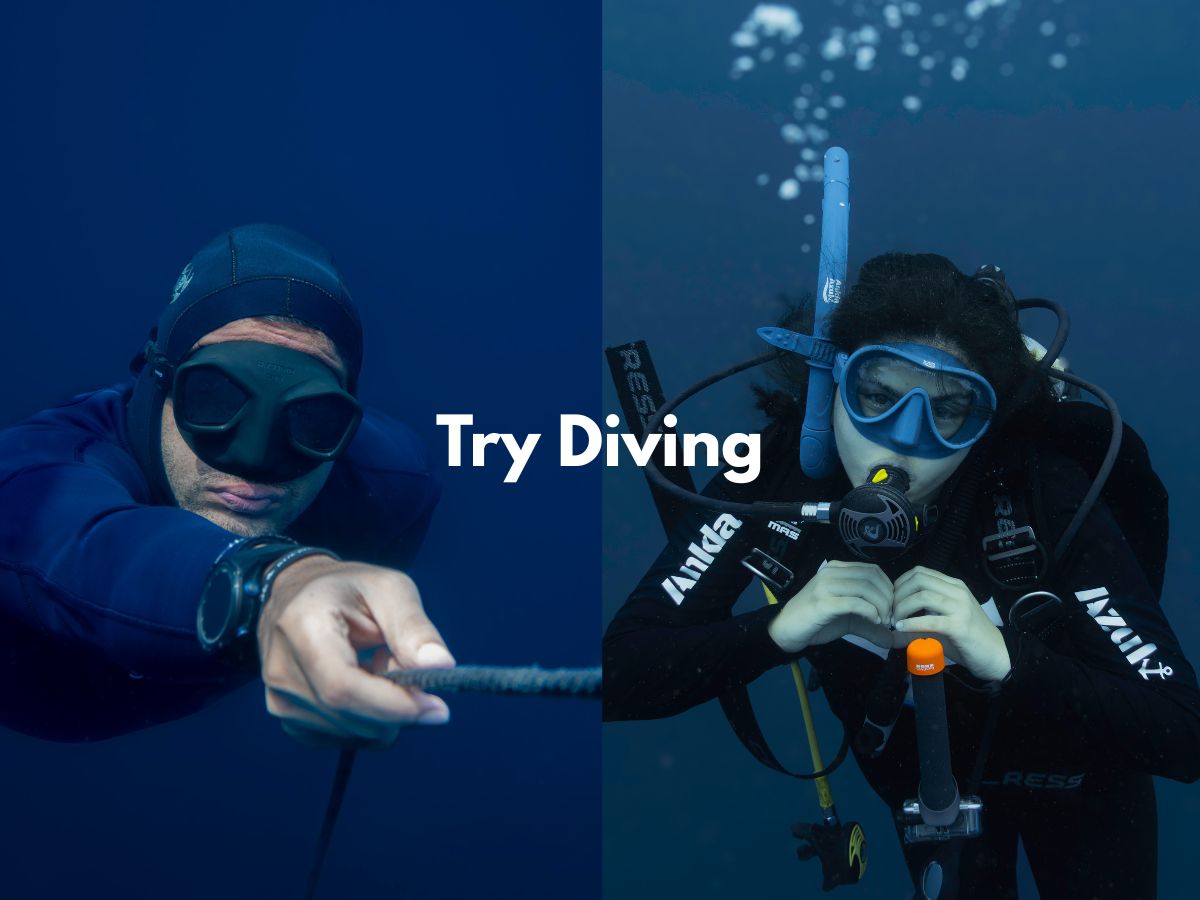
En Ankla Azul, el buceo es mucho más que mover las aletas. Es enseñanza paciente, seguridad rigurosa y un cuidado genuino por el lugar que llamamos hogar. Como Centro de Formación de Instructores SSI y Centro SSI Blue Oceans (reconocimiento 2025), combinamos el desarrollo de habilidades con la conciencia oceánica—identificación de peces, trabajo en viveros de coral, educación comunitaria y apoyo en rescate—para que cada inmersión fortalezca la confianza y el respeto por el Pacífico salvaje de Bahía Solano.