
Giant Hawkfish
Cirrhitus rivulatus
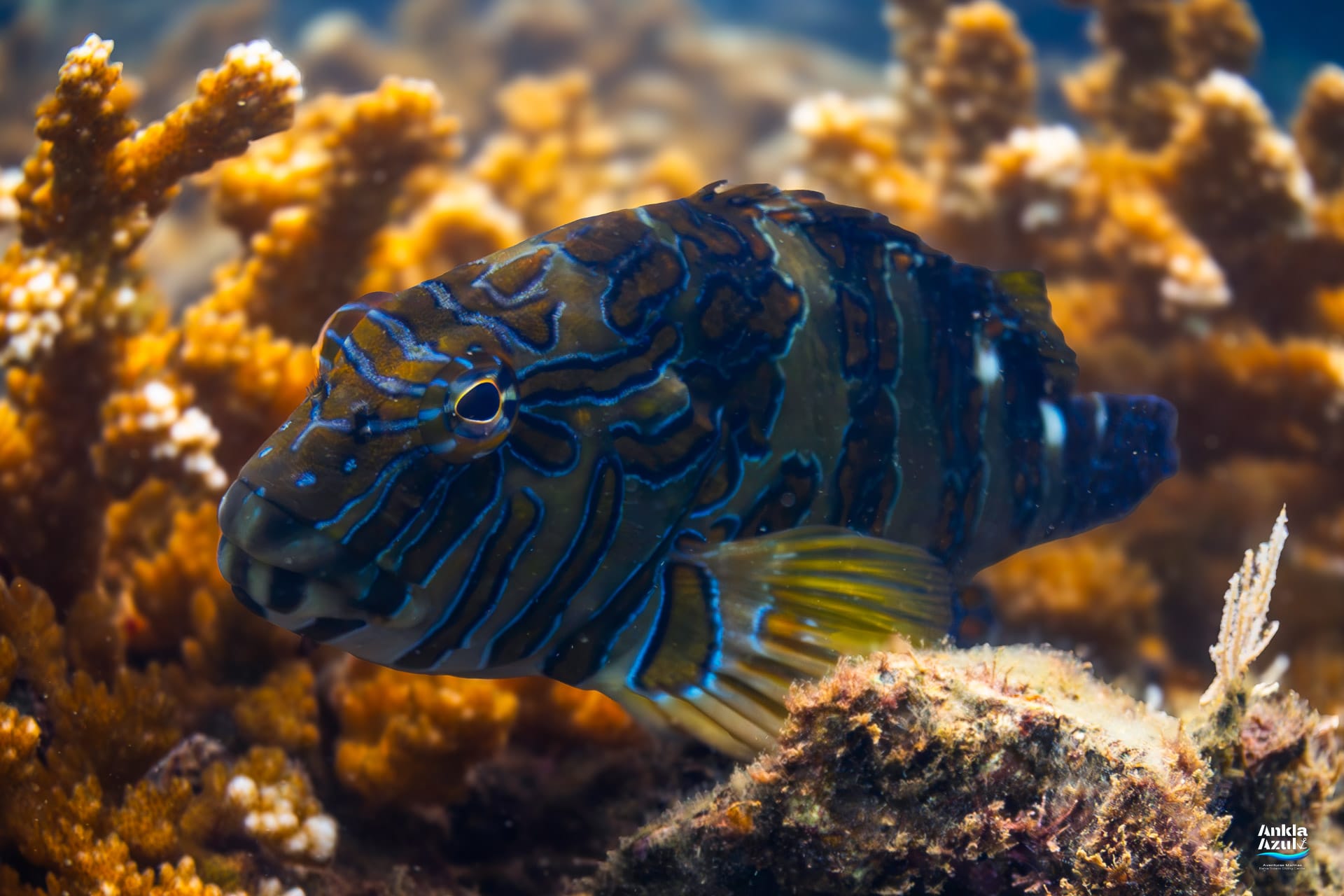
Adulto
Familia: Pez Halcón(Cirrhitidae))
Tamaño: Hasta 60 cm (24 pulgadas) | Común 35 cm
Profundidad: 3–30 m (10–100 ft)
Distribución: Pacífico Oriental (desde el Golfo de California hasta Colombia y Ecuador, incluyendo las Islas Galápagos y Malpelo).
Identificación: El indiscutible peso pesado de la familia de los peces halcón.
- Color y Patrón: Su cuerpo robusto y macizo presenta un intrincado patrón de líneas azul neón y turquesa sobre un fondo moteado de tonos oliva, marrón o dorado.
- El rostro: Posee labios grandes y gruesos, junto con ojos prominentes ubicados en la parte superior de la cabeza, lo que le proporciona un excelente campo de visión hacia arriba para detectar presas que pasan por encima.
Comportamiento: El paciente centinela del arrecife.
- Posarse: Como todos los peces halcón, carece de vejiga natatoria. Al no poder mantenerse suspendido en la columna de agua, utiliza la parte inferior engrosada de sus aletas pectorales como si fueran un "tren de aterrizaje", permitiéndole posarse cómodamente sobre cabezas de coral y afloramientos rocosos.
- Caza al acecho: Es un depredador territorial especializado en emboscadas. Permanece completamente inmóvil en puntos elevados de observación, esperando pacientemente a que pequeños peces o crustáceos se acerquen lo suficiente para lanzar un ataque extremadamente rápido.
Acabas de aprender sobre este pez…
¡AHORA VEN A VERLO!
Tras el lente
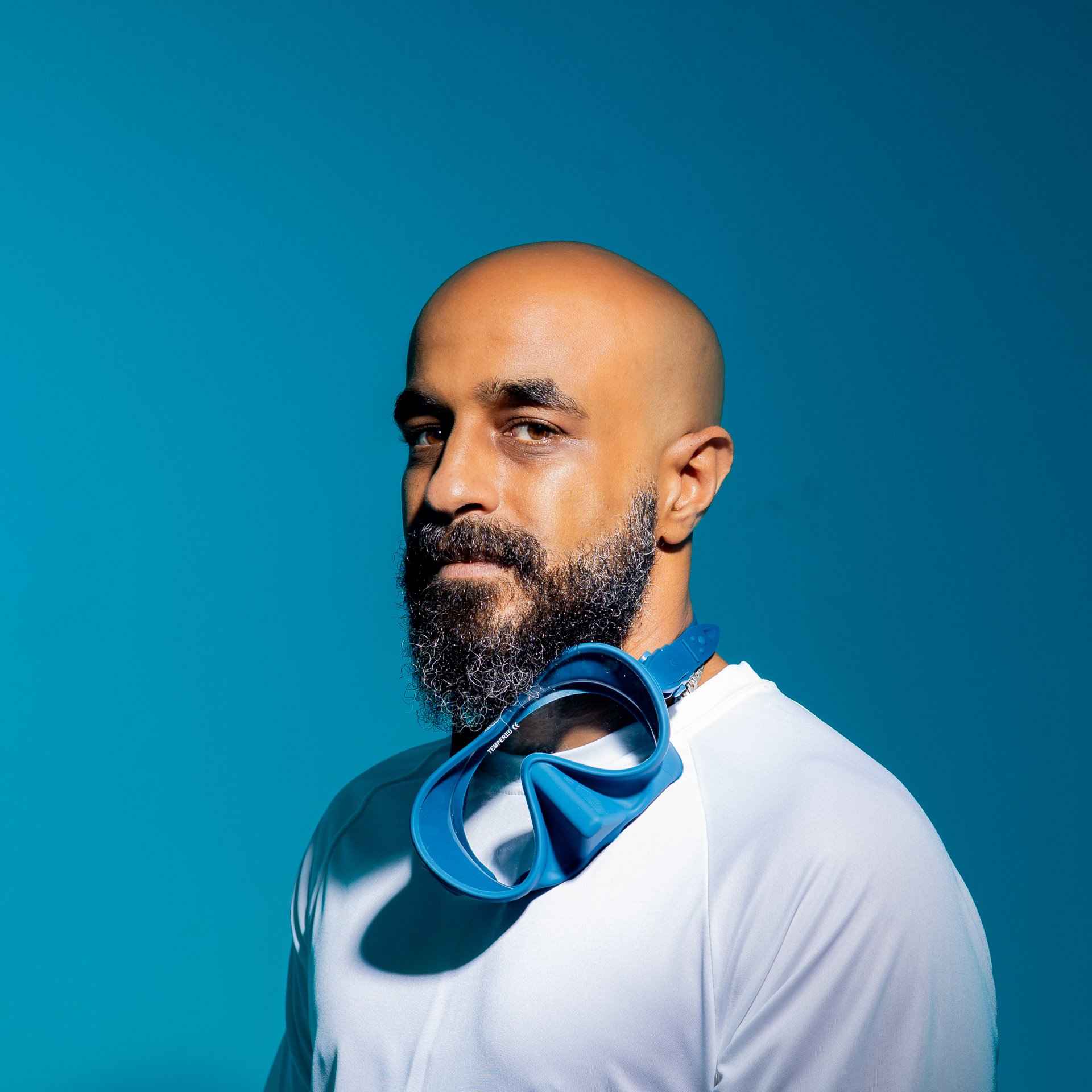
Jalvan
Fotógrafo subacuático & instructor
Documentando la biodiversidad marina única desde el Mar Rojo hasta el Océano Pacífico.. Dedicated to creating a visual catalog of Bahia Solano's marine life for conservation and research.
Video Osmo Action 5 Pro | GoPro
Sigue mi trabajo:
advertisement
REFERENCIAS Y FUENTES DE DATOS
- Scientific ID: Verified via FishBase (Froese & Pauly).
- Guía de campo: Reef Fish Identification: Baja to Panama (Humann & DeLoach).
- Datos regionales: Registro de Observaciones Marinas de Ankla Azul (Bahía Solano).
Mucho más que solo mover las aletas
En Ankla Azul, el buceo es mucho más que mover las aletas. Es enseñanza paciente, seguridad rigurosa y un cuidado genuino por el lugar que llamamos hogar. Como Centro de Formación de Instructores SSI y Centro SSI Blue Oceans (reconocimiento 2025), combinamos el desarrollo de habilidades con la conciencia oceánica—identificación de peces, trabajo en viveros de coral, educación comunitaria y apoyo en rescate—para que cada inmersión fortalezca la confianza y el respeto por el Pacífico salvaje de Bahía Solano.