
Harlequin Shrimp
Hymenocera picta
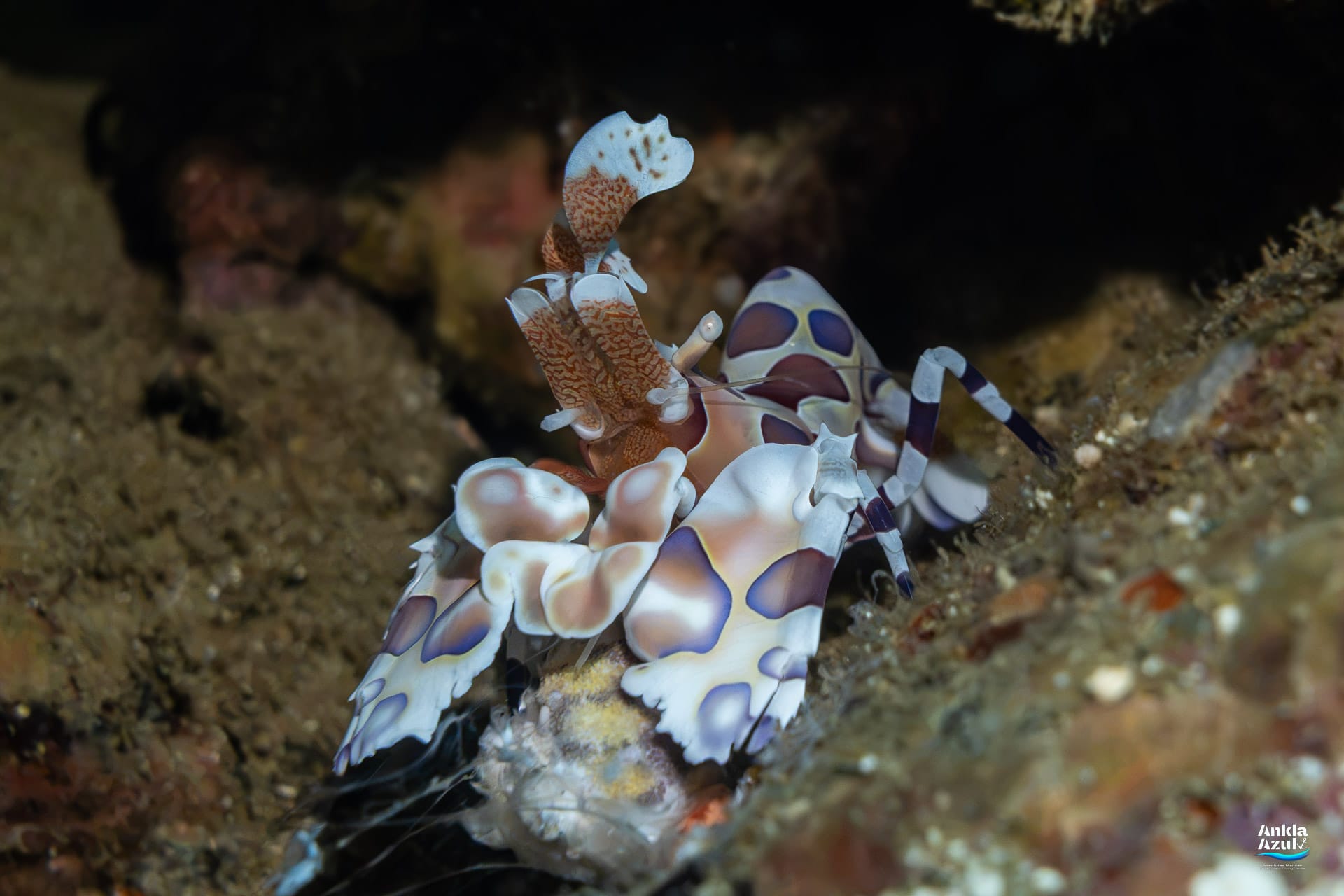
Adulto
Familia: Camarones palaemónidos (Palaemonidae)
Tamaño: 2,5–5 cm (1–2 pulgadas)
Profundidad: 1–20 m (3–65 pies)
Distribución: Océano Pacífico Oriental y Central (su especie hermana, Hymenocera elegans, se encuentra en el Indo-Pacífico).
Identificación: Encontrar esta increíble criatura es una experiencia poco común y realmente fascinante para cualquier buceador.
- Color y Forma: El cuerpo es blanco, cubierto de distintivas manchas rojas y moradas. El primer par de patas está modificado en grandes pinzas aplanadas en forma de pétalos (quelas), que utiliza para cazar. En la cabeza, tiene antenas sensoriales especializadas en forma de “pétalos” que le ayudan a detectar el olor de sus presas.
- Macho vs. hembra: Las hembras generalmente son más grandes, tienen placas abdominales de colores debajo de la cola y presentan puntas azules visibles en sus patas natatorias (pleópodos).
Comportamiento: Un cazador de estrellas de mar tímido pero feroz.
- Dieta: Son depredadores nocturnos altamente especializados que se alimentan casi exclusivamente de estrellas de mar (y ocasionalmente de erizos de mar si están hambrientos). Trabajando en pareja, pueden voltear hábilmente una estrella de mar lenta sobre su espalda, alimentándose de sus pies ambulacrales y tejidos blandos.
- Vínculo de pareja y hábitat: Tímidos y de temperamento tranquilo, prefieren esconderse en grietas oscuras. Son monógamos y forman vínculos de pareja, lo que significa que permanecen juntos de por vida. Una vez que establecen su refugio en un agujero rocoso, pueden permanecer exactamente en el mismo lugar durante meses o incluso años.
- Reproducción y defensa: Las hembras cuidan y oxigenan agresivamente hasta 5.000 huevos por temporada. Los estudios sugieren que pueden retener toxinas de sus presas, lo que las hace potencialmente peligrosas para los depredadores. Aunque están clasificadas como “No Evaluadas” por la UICN, su dieta altamente especializada y su dependencia de arrecifes de coral frágiles las hacen vulnerables a la pérdida de hábitat.
Acabas de aprender sobre este pez…
¡AHORA VEN A VERLO!
Tras el lente
Jalvan
Fotógrafo subacuático & instructor
Documentando la biodiversidad marina única desde el Mar Rojo hasta el Océano Pacífico.. Dedicated to creating a visual catalog of Bahia Solano's marine life for conservation and research.
Sigue mi trabajo:

advertisement
REFERENCIAS Y FUENTES DE DATOS
Identificación Científica: Verificada a través de FishBase (Froese & Pauly, 2024).
Guía de campo: Reef Fish Identification: Baja to Panama (Humann & DeLoach).
Estado de conservación Lista Roja de la UICN (Preocupación menor).
Datos Regionales: Registro de Observación Marina de Ankla Azul (Bahía Solano).
Mucho más que solo mover las aletas
En Ankla Azul, el buceo es mucho más que mover las aletas. Es enseñanza paciente, seguridad rigurosa y un cuidado genuino por el lugar que llamamos hogar. Como Centro de Formación de Instructores SSI y Centro SSI Blue Oceans (reconocimiento 2025), combinamos el desarrollo de habilidades con la conciencia oceánica—identificación de peces, trabajo en viveros de coral, educación comunitaria y apoyo en rescate—para que cada inmersión fortalezca la confianza y el respeto por el Pacífico salvaje de Bahía Solano.