
Wounded Wrasse
Halichoeres chierchiae
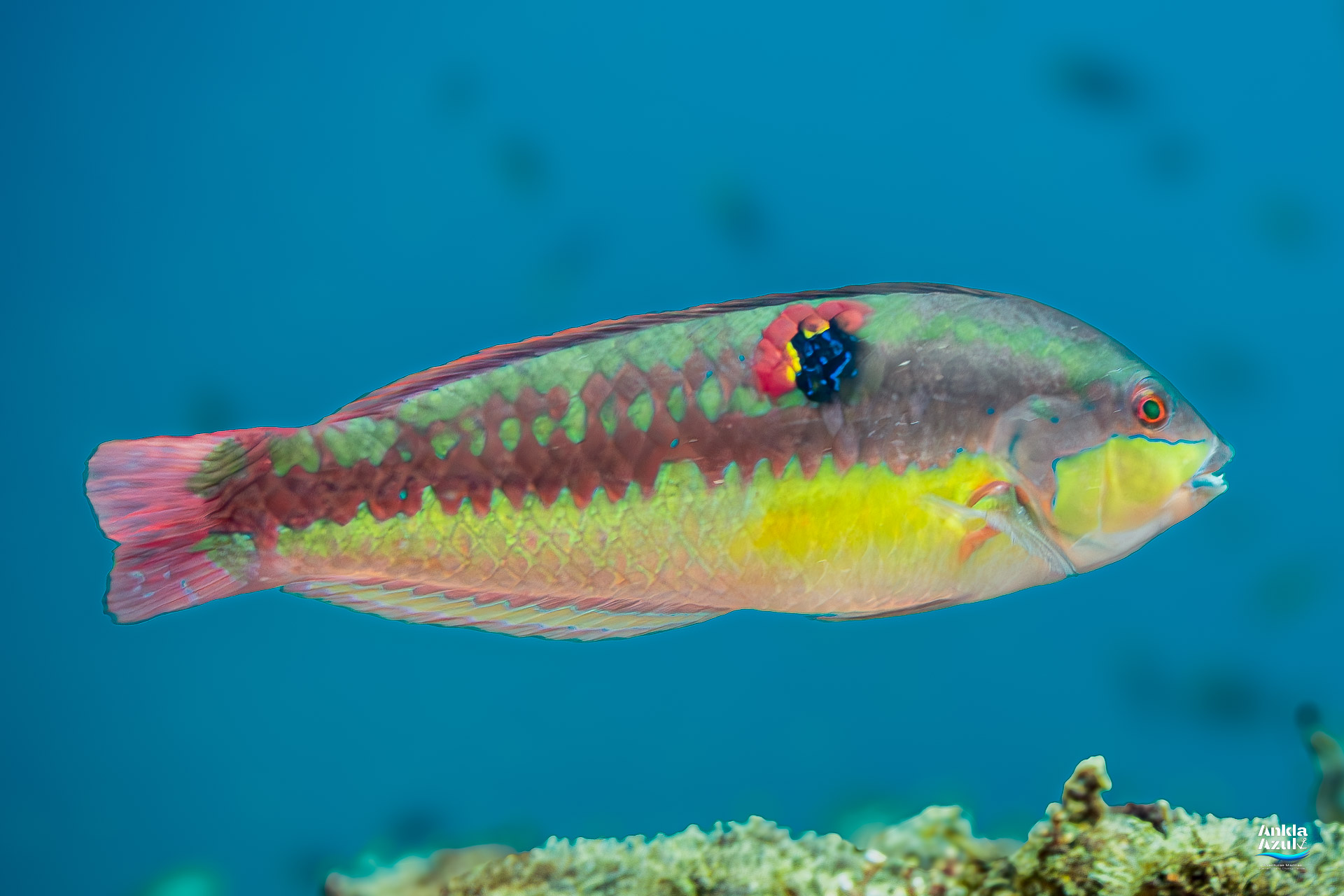
Adulto
Familia: Wrasses (Labridae)
Tamaño: Up to 20 cm (8 in) | Común 15 cm
Profundidad: 2 – 35m (6 – 115ft)
Distribución: Eastern Pacific (Gulf of California to Peru & Galapagos).
Identificación:
A colorful reef dweller named for a unique marking that looks like an injury.
- The "Wound": Terminal Phase males (like the first picture) have a distinct red and blue blotch on their side, just above the pectoral fin. It looks exactly like a fresh wound, which is how they got their name.
- Sexual Dimorphism: They change sex and color as they grow. Females and juveniles (Initial Phase) are completely different—usually greenish-brown without the "wound" marking.
Comportamiento:
A busy hunter on the move.
- Movement: Like all wrasses, they swim using their pectoral fins (flapping like wings) rather than their tail. They are constantly on the move, darting around rocks to hunt.
- Feeding: They are carnivorous, using sharp teeth to pick small crabs, shrimp, and mollusks off the reef.
You just learned about this fish...
¡AHORA VEN A VERLO!
Tras el lente
Jalvan
Fotógrafo subacuático & instructor
Documentando la biodiversidad marina única desde el Mar Rojo hasta el Océano Pacífico.. Dedicated to creating a visual catalog of Bahia Solano's marine life for conservation and research.
Video Osmo Action 5 Pro | GoPro
Sigue mi trabajo:

REFERENCIAS Y FUENTES DE DATOS
- Identificación científica: Verificada a través de FishBase.
- Guía de campo: Reef Fish Identification: Baja to Panama (Humann & DeLoach).
- Datos regionales: Registro de Observaciones Marinas de Ankla Azul (Bahía Solano).
Mucho más que solo mover las aletas
At Ankla Azul, diving is more than kicking your fins. It's patient teaching, sharp safety, and real care for the place we call home. As an SSI Instructor Training Center and an SSI Blue Oceans Center (2025 award), we blend skill-building with ocean awareness—Fish ID, coral nursery work, community education, and rescue support—so every dive grows confidence and respect for Bahía Solano's wild Pacific.